


In-ear translation devices represent a technological advancement designed to facilitate real-time communication across language barriers. These devices primarily function by capturing spoken language, processing it through a translation engine, and delivering the translated output to the user’s ear in near real-time. The goal is to make cross-lingual interaction more immediate and less reliant on human interpreters or manual translation processes. This article will explore the mechanisms, applications, challenges, and future trajectory of this developing technology.
The concept of instant translation has been a subject of scientific and fictional exploration for decades, often appearing in science fiction as universal translators. The practical development of in-ear translation devices, however, is relatively recent, coinciding with advancements in several key technological fields.
Early Concepts and Precursors
Before the advent of dedicated in-ear devices, precursor technologies laid the groundwork. Machine translation (MT) began in the 1950s with early attempts at rule-based translation. These systems required extensive linguistic rules and dictionaries and often produced translations of limited quality. The focus was primarily on text-to-text translation rather than real-time speech. Subsequent developments in statistical machine translation (SMT) in the 1980s and 1990s improved translation quality by analyzing large corpora of parallel texts to learn translation patterns. These systems, while more robust, still struggled with nuances, idiomatic expressions, and real-time processing.
Emergence of Speech Recognition and Synthesis
The critical components for in-ear translation are speech recognition and speech synthesis. Automatic Speech Recognition (ASR) technology, which converts spoken language into text, improved significantly with the rise of computational power and sophisticated algorithms, particularly neural networks. Similarly, Text-to-Speech (TTS) technology, which converts text into synthetic speech, also saw advancements. The convergence of improved ASR, robust MT, and high-quality TTS engines created the technical foundation for real-time spoken language translation.
First Commercial Products
The first commercial in-ear translation devices began appearing in the mid-2010s. These early iterations often required a smartphone application to handle the heavy computational load of translation, with the in-ear device acting primarily as an audio input/output interface. The initial offerings demonstrated the feasibility of the concept but also highlighted limitations in latency, translation accuracy, and battery life. As these technologies mature, devices are becoming more self-contained and performant, moving the processing closer to the device itself or leveraging cloud-based solutions with robust connectivity.
In the realm of technology that enhances communication, in-ear translation devices are making significant strides in breaking language barriers in real-time. A related article that explores another innovative technology is the review of Huawei smartwatches, which highlights how wearable devices are evolving to integrate advanced features that aid in daily tasks and communication. For more insights on this topic, you can read the article here: Huawei Smartwatches Review.
How In-Ear Translation Devices Work
The operation of an in-ear translation device is a multi-step process involving several distinct technological components working in concert. Imagine this process as a linguistic assembly line, where spoken words enter at one end and emerge as translated speech at the other.
Audio Input and Noise Reduction
The journey begins with audio capture. The in-ear device typically contains a miniature microphone designed to pick up the user’s voice or the voice of the person speaking to the user. This microphone is crucial for capturing clear audio. Environmental noise, such as background conversations, music, or street sounds, can significantly impede the accuracy of subsequent processing stages. Therefore, many devices incorporate noise reduction technologies. These might include directional microphones that primarily pick up sound from a specific direction, or digital signal processing (DSP) algorithms that identify and filter out unwanted noise, isolating the speaker’s voice. The cleaner the audio input, the higher the probability of accurate translation.
Speech Recognition (ASR)
Once the audio is captured and refined, it is fed into an Automatic Speech Recognition (ASR) engine. The ASR system’s task is to convert the spoken words into written text. This is a complex computational process. Modern ASR systems predominantly utilize deep learning, specifically neural networks trained on vast datasets of spoken language and their corresponding text. These networks learn to recognize phonemes (the basic units of sound in a language), words, and grammatical structures. The accuracy of ASR is influenced by factors such as accent, speech rate, vocabulary size, and the clarity of the audio input. An error at this stage will cascade through the entire translation process, leading to an incorrect translation.
Machine Translation (MT)
With the spoken input converted into text, the text is then sent to a Machine Translation (MT) engine. This is the core component responsible for converting the text from the source language to the target language. There are several paradigms of machine translation:
- Rule-Based Machine Translation (RBMT): These systems rely on hand-coded linguistic rules, dictionaries, and grammars. While precise for specific domains, they are labor-intensive to develop and struggle with linguistic creativity and ambiguity.
- Statistical Machine Translation (SMT): SMT systems analyze large parallel corpora (texts translated by human experts) to learn statistical models of how words and phrases in one language map to another. They are more adaptable than RBMT but can produce translations that are grammatically correct but semantically awkward.
- Neural Machine Translation (NMT): NMT is the current state-of-the-art. It uses deep neural networks, often transformer architectures, to learn complex relationships between entire sequences of text. NMT systems are known for producing more fluid and human-like translations, handling context better than previous methods. They learn to generate translations from scratch rather than simply mapping words.
The MT engine processes the recognized text, translating it into the desired target language. The quality of this translation is paramount and is the primary determinant of the device’s utility.
Speech Synthesis (TTS)
After the machine translation engine produces the translated text, this text is then passed to a Text-to-Speech (TTS) engine. The TTS engine converts the written text in the target language back into spoken audio. Modern TTS systems often use deep learning to generate natural-sounding speech, varying pitch, intonation, and rhythm to mimic human speech patterns. The goal is not just to produce understandable words, but to deliver them in a natural and engaging voice, enhancing the user experience. The quality of synthetic speech directly impacts how easily the user can understand the translated output.
Audio Output and Latency
Finally, the synthesized speech in the target language is played back to the user through the in-ear speaker. The entire process—from audio input to audio output—is designed to occur with minimal delay. This delay is known as latency. For real-time conversation, low latency is critical. High latency disrupts the flow of conversation, creating awkward pauses and making it difficult for users to maintain a natural dialogue. Reducing latency involves optimizing each stage of the processing pipeline, often leveraging powerful cloud computing resources or on-device AI accelerators for faster execution. The connection to the internet is also crucial for cloud-based processing, as network latency can add significant delays.
Applications and Use Cases
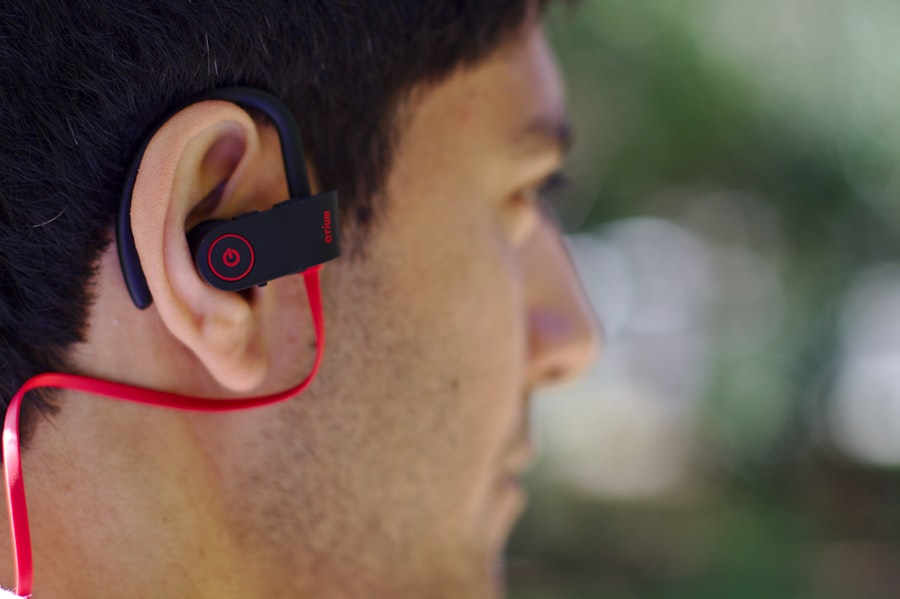
The utility of in-ear translation devices spans various domains, offering solutions to communication challenges in diverse settings. Consider these devices as linguistic bridges, connecting individuals who would otherwise be separated by language barriers.
Travel and Tourism
For individuals traveling internationally, language barriers can be a significant impediment to navigating new environments, ordering food, or interacting with locals. In-ear translation devices offer a degree of independence by allowing travelers to understand directions, read menus aloud, communicate with hotel staff, or engage in basic conversations without needing a phrasebook or an interpreter. This enhances the travel experience, making it more accessible and less stressful. Imagine a traveler asking for directions in a foreign city and receiving an immediate, understandable response in their native language, directly in their ear.
International Business and Conferences
In globalized business environments, seamless communication is essential. While professional human interpreters remain vital for high-stakes negotiations or formal conferences, in-ear devices can facilitate more casual, impromptu interactions among attendees or during smaller team meetings. They can enable individuals from different linguistic backgrounds to discuss project details, network, or collaborate on tasks without constant pauses for manual translation. For business professionals, these devices can reduce misunderstandings and streamline communication, potentially accelerating decision-making processes.
Education and Language Learning
Within educational settings, in-ear translation devices hold potential. Students studying abroad might use them to follow lectures or interact with peers. For language learners, these devices could act as supplementary tools, providing immediate translations of unfamiliar words or phrases encountered in real-world conversations, thereby aiding comprehension and potentially accelerating the learning process by providing context-rich exposure to the target language. They can serve as digital training wheels, offering support during immersion experiences.
Healthcare and Emergency Services
In critical situations, such as medical emergencies, effective communication between patients and healthcare providers can be life-saving. In-ear translation devices could bridge language gaps, allowing medical personnel to understand symptoms, explain procedures, or gather crucial medical history from non-native speakers. Similarly, emergency responders could use these devices to communicate with individuals during crises, ensuring that vital information is exchanged quickly and accurately, regardless of language. The stakes are high, and these devices offer a means to reduce miscommunication in high-pressure scenarios.
Multilingual Social Interactions
Beyond formal settings, these devices can facilitate richer social interactions in diverse communities. They allow individuals from different language backgrounds to engage in casual conversations, fostering connection and understanding. This could be particularly useful in multicultural cities, community events, or even within families where members speak different languages. By lowering the barrier to conversation, these devices can help break down an invisible wall between people, enabling more spontaneous and authentic exchanges.
Challenges and Limitations

Despite their promise, in-ear translation devices face significant challenges that affect their performance, adoption, and overall utility. Understanding these limitations is crucial for evaluating their current capabilities and future potential.
Accuracy and Contextual Understanding
While machine translation has improved, it is not flawless. Ambiguity, idiomatic expressions, sarcasm, and cultural nuances remain difficult for even advanced NMT systems to fully grasp. Imagine a translator as a sieve; coarse sieves let much through, while fine sieves are more selective. Current MT is still a somewhat coarse sieve for complex human communication. A literal translation might be grammatically correct but entirely miss the intended meaning in context. Moreover, different languages have distinct sentence structures and ways of expressing concepts. Poor source audio (e.g., strong accents, fast speech, mumbling, or background noise) further degrades ASR accuracy, leading to errors even before translation begins. These inaccuracies can lead to misunderstandings, particularly in conversations requiring precision or cultural sensitivity.
Latency and Conversational Flow
| Metric | Value | Description |
|---|---|---|
| Translation Accuracy | 85-95% | Percentage of correctly translated phrases in real-time conversations |
| Supported Languages | 40+ | Number of languages the device can translate between |
| Latency | 0.5-2 seconds | Time delay between spoken input and translated output |
| Battery Life | 6-8 hours | Average continuous usage time on a single charge |
| Device Weight | 15-25 grams | Weight of the in-ear translation device for comfort and portability |
| Connectivity | Bluetooth 5.0 / Wi-Fi | Wireless technologies used for device pairing and internet access |
| Price Range | 100-300 | Typical retail price range of in-ear translation devices |
| User Satisfaction | 4.2/5 | Average user rating based on reviews and feedback |
Real-time conversation demands extremely low latency. Each step in the translation pipeline (audio capture, ASR, MT, TTS, audio output) introduces a delay. While milliseconds may seem negligible individually, cumulative latency can disrupt the natural rhythm of a conversation, leading to awkward pauses, interruptions, and a less fluid interaction. A delay of even a few seconds can make a conversation feel labored. This “ping-pong” effect can be frustrating for both parties and detracts from the spontaneous nature of human communication. Achieving near-instantaneous translation remains a significant engineering hurdle.
Battery Life and Computational Power
The sophisticated processing required for ASR, MT, and TTS is computationally intensive. When these tasks are performed on the device itself, it demands significant processing power, which in turn consumes considerable battery life. Miniaturizing powerful processors and efficient batteries into a small, wearable in-ear form factor presents a challenge. Many devices currently offload much of this processing to a connected smartphone or cloud servers, which then introduces reliance on a secondary device and a stable internet connection. Balancing on-device processing capabilities with extended battery life is an ongoing design challenge.
Connectivity and Reliance on Internet
Most high-performing in-ear translation devices rely heavily on cloud-based MT engines due to the immense computational power and vast language models these engines require. This means a stable and fast internet connection (Wi-Fi or cellular data) is often essential for optimal performance. In areas with poor or no internet coverage, the functionality of the device may be severely limited or entirely unavailable. This reliance can restrict their utility in remote areas, during international travel where data roaming is expensive, or in situations where connectivity is unreliable. Offline translation modes exist but typically offer lower accuracy and support fewer languages due to the storage and processing constraints of on-device models.
Privacy and Security Concerns
The nature of these devices, which constantly process spoken audio, raises privacy concerns. Conversations might contain sensitive personal, financial, or proprietary information. When audio is sent to cloud servers for processing, there is a risk of data interception, unauthorized access, or misuse. Users need assurance that their conversations are secure, encrypted, and not stored or analyzed beyond what is necessary for translation. Transparency regarding data handling, robust encryption protocols, and adherence to data protection regulations (like GDPR) are crucial for building user trust and ensuring the ethical deployment of this technology. These devices are, in effect, always listening, which carries inherent privacy implications.
Language Support and Linguistic Diversity
While major global languages are generally well-supported by MT engines, the vast majority of the world’s languages, particularly those with fewer speakers or less digitalized text, receive limited support or none at all. Developing robust MT models for every language is a monumental task, requiring extensive datasets and linguistic expertise. This limits the device’s utility for users who speak less common languages or travel to regions with diverse linguistic landscapes. The “digital divide” in language support means that these devices primarily serve those using broadly spoken languages, leaving a significant portion of the global population still facing language barriers.
In the realm of communication technology, in-ear translation devices are revolutionizing the way we interact across language barriers in real-time. These innovative gadgets not only enhance personal and professional exchanges but also pave the way for a more interconnected world. For those interested in exploring other technological advancements, a fascinating article on the latest software tools can be found here: the ultimate guide to the best screen recording software in 2023, which highlights how technology continues to shape our daily lives.
Future Outlook and Innovations
The field of in-ear translation is dynamic, with ongoing research and development aimed at overcoming current limitations and expanding capabilities. Envision these devices evolving from useful tools into near-seamless communication companions.
Advancements in AI and Machine Learning
Continued progress in Artificial Intelligence, particularly in deep learning and neural networks, will drive significant improvements. Expect more sophisticated NMT models that better handle context, nuance, and idiomatic expressions, leading to more accurate and natural-sounding translations. Hybrid models combining rule-based approaches with neural networks might also emerge to leverage the strengths of both. Improvements in zero-shot and few-shot learning could enable faster adaptation to new languages or specialized domains with less training data, expanding language support more rapidly. The intelligence embedded in these devices will become more profound.
Reduced Latency and Edge Computing
Efforts to minimize translation latency are paramount. This involves optimizing algorithms for speed, but also leveraging edge computing. Edge computing involves performing more processing closer to the data source (i.e., on the device itself or a nearby mobile device) rather than sending everything to distant cloud servers. This reduces network latency and can improve response times. Dedicated AI chips (neural processing units or NPUs) in future devices will enable more powerful on-device processing, allowing for faster translations even without a constant cloud connection. The goal is a conversation that flows as naturally as if both parties spoke the same language.
Enhanced Offline Capabilities
As on-device AI capabilities grow, devices will offer more robust offline translation modes. This means packing more comprehensive language models onto the device, allowing for reliable translation even in areas without internet access. While offline models may not initially match the accuracy of online cloud-based systems, their increasing sophistication will make them highly practical for travelers and users in connectivity-challenged environments. This greatly expands the utility of the devices, making them true standalone tools.
Integration with Augmented Reality (AR)
The convergence of in-ear translation with Augmented Reality (AR) platforms presents an intriguing future. Imagine an AR headset or smart glasses that can translate spoken language and also display translated text overlayed onto real-world objects or signs. For instance, a tourist could look at a menu and see an instant translation displayed directly on the physical menu itself, while also having conversations translated in their ear. This multimodal approach could create a more immersive and comprehensive linguistic experience, blurring the lines between auditory and visual translation.
Personalization and Learning from User
Future devices may incorporate personalization features. This could involve learning a user’s specific vocabulary, accent, or preferred communication style over time, leading to more accurate and tailored translations. For example, a device used by a doctor might learn medical terminology, or one used by an engineer might learn technical jargon, improving translation quality within specific domains. This adaptive learning capability would make the devices more effective companions for individual users, gradually refining their linguistic “ear.”
Multimodal Translation
Beyond simple speech-to-speech, future advancements will likely include multimodal translation. This involves processing not just audio, but also visual cues (like lip movements, gestures, or facial expressions) to enhance contextual understanding and improve translation accuracy. For instance, an AI might discern the intent of a speaker more accurately by analyzing their body language in addition to their words. This moves beyond mere word-for-word translation to a more holistic interpretation of human communication, leading to translations that are not just linguistically correct but also culturally and emotionally attuned.
In the realm of technology that enhances communication, in-ear translation devices are making significant strides in breaking language barriers in real-time. A fascinating exploration of how devices like these are revolutionizing our interactions can be found in an article about the Samsung Galaxy Chromebook 2. This device not only showcases advanced features but also highlights the importance of seamless connectivity in today’s globalized world. For more insights, you can read the article here.
Conclusion
In-ear translation devices are technological facilitators, promising to significantly reduce language barriers. While challenges related to accuracy, latency, and privacy persist, continuous innovation in AI, edge computing, and hardware miniaturization suggests a future where these devices become increasingly sophisticated and pervasive. They represent a step towards a more interconnected world, where the ability to communicate across languages becomes less of a hurdle and more of a given. The journey from science fiction concept to practical reality is ongoing, with each successive generation of devices bringing us closer to a truly seamless cross-lingual interaction experience.
FAQs
What are in-ear translation devices?
In-ear translation devices are compact, wearable gadgets designed to provide real-time language translation directly into the user’s ear. They use advanced speech recognition and translation technology to convert spoken words from one language to another almost instantly.
How do in-ear translation devices work?
These devices capture spoken language through built-in microphones, process the audio using AI-powered translation software, and then deliver the translated speech through an earpiece. They often connect to smartphones or cloud services to access extensive language databases and improve accuracy.
Which languages do in-ear translation devices support?
Most in-ear translation devices support a wide range of languages, often including major global languages such as English, Spanish, Mandarin, French, German, Japanese, and many others. The exact number of supported languages varies by device and manufacturer.
Are in-ear translation devices accurate and reliable?
While in-ear translation devices have significantly improved in accuracy due to advances in AI and machine learning, their reliability can vary depending on factors like background noise, speech clarity, and language complexity. They are generally effective for everyday conversations but may struggle with specialized terminology or dialects.
Who can benefit from using in-ear translation devices?
In-ear translation devices are useful for travelers, business professionals, educators, and anyone who needs to communicate across language barriers quickly and efficiently. They facilitate smoother interactions in multicultural environments and help break down communication obstacles in real-time.