


Hypersonic travel refers to the ability to move at speeds exceeding Mach 5, or five times the speed of sound. This level of velocity presents unique challenges and opportunities in various fields, including military applications, commercial aviation, and space exploration. The concept of hypersonic travel has captured the imagination of scientists, engineers, and the general public alike, as it promises to significantly reduce travel times across vast distances.
For instance, a flight from New York to London could potentially take less than an hour, revolutionizing global connectivity.
The pursuit of hypersonic travel is not merely a theoretical endeavor; it is grounded in ongoing research and development efforts by various nations and private entities. Countries such as the United States, China, and Russia are investing heavily in hypersonic technologies, recognizing their strategic importance in defense and economic competitiveness. As advancements continue to emerge, the implications of hypersonic travel extend beyond mere speed; they encompass safety, environmental impact, and the future of transportation infrastructure.
In exploring the future of transportation, the concept of hypersonic travel presents numerous engineering challenges, particularly at speeds exceeding Mach 5. For those interested in cutting-edge technology, a related article discusses the innovative features of the iPhone 14 Pro, which showcases advancements in engineering and design that parallel the complexities faced in hypersonic travel. You can read more about it in this article: What is Special About the iPhone 14 Pro?.
Key Takeaways
- Hypersonic travel involves speeds exceeding Mach 5, presenting unique engineering challenges.
- Advanced materials and heat management are critical to withstand extreme aerodynamic heating.
- Propulsion systems like scramjets are essential for sustained hypersonic flight.
- Precise guidance and control technologies are necessary for stability at hypersonic speeds.
- Ongoing testing and innovation will shape the future viability of commercial and military hypersonic vehicles.
The Race for Mach 5+ Speed
The race to achieve and sustain speeds greater than Mach 5 has intensified in recent years, driven by both military and commercial interests. In the military domain, hypersonic weapons are being developed to enhance strike capabilities and evade traditional missile defense systems. These weapons can travel at speeds that make interception exceedingly difficult, thus altering the landscape of modern warfare. Nations are competing not only to develop these technologies but also to establish dominance in hypersonic capabilities.
On the commercial front, several companies are exploring the potential for hypersonic passenger travel. The prospect of drastically reduced flight times has attracted significant investment and interest from both private investors and government agencies. Companies like Virgin Galactic and Boom Supersonic are working on technologies that could pave the way for hypersonic air travel, aiming to create a new market segment that caters to high-speed international travel. The convergence of military and commercial interests in hypersonic technology underscores its multifaceted significance in contemporary society.
Aerodynamics and Heat Management

Aerodynamics plays a crucial role in hypersonic travel, as vehicles must navigate through the atmosphere at extreme speeds. At Mach 5 and beyond, the airflow around a vehicle becomes highly complex, leading to phenomena such as shock waves and increased drag. Engineers must carefully design the shape of hypersonic vehicles to minimize drag while maximizing stability and control. Streamlined designs that reduce turbulence are essential for maintaining speed and efficiency during flight.
Heat management is another critical aspect of hypersonic travel. As vehicles move at such high velocities, they encounter significant friction with the atmosphere, resulting in extreme temperatures that can damage structural components. Effective thermal protection systems are necessary to shield sensitive parts of the vehicle from heat damage. Researchers are exploring various cooling techniques, including active cooling systems that circulate fluids to dissipate heat and passive systems that utilize advanced materials capable of withstanding high temperatures. The integration of aerodynamics and heat management strategies is vital for ensuring the safety and performance of hypersonic vehicles.
Materials and Structural Integrity
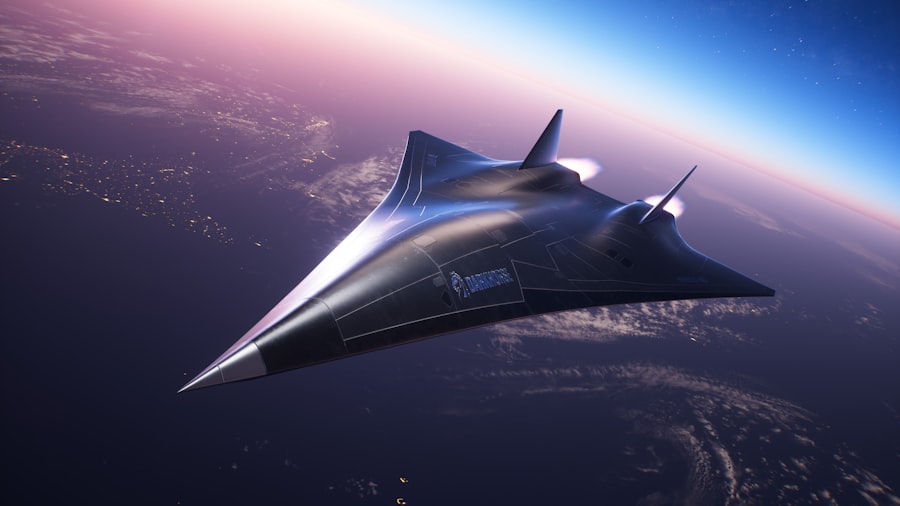
The materials used in hypersonic vehicles must withstand not only high temperatures but also immense pressures and stresses during flight. Traditional materials often fall short when exposed to the extreme conditions associated with hypersonic speeds.
As a result, researchers are investigating advanced materials such as carbon composites, ceramics, and metal alloys that offer superior thermal resistance and structural integrity.
The structural design of hypersonic vehicles must also account for the dynamic forces experienced during flight. Engineers employ sophisticated modeling techniques to predict how materials will behave under various conditions, ensuring that the vehicle can maintain its shape and functionality throughout its journey. Innovations in additive manufacturing are also being explored to create complex geometries that optimize weight while enhancing strength. The ongoing development of materials and structural designs is essential for advancing hypersonic technology and achieving reliable performance.
Hypersonic travel represents a significant leap in aerospace engineering, pushing the boundaries of speed and efficiency. As researchers and engineers tackle the complexities of achieving and sustaining speeds greater than Mach 5, they also draw parallels with advancements in other fields, such as the development of technology for educational purposes. For instance, understanding how to choose the right tablet for students can enhance learning experiences, much like how hypersonic innovations could revolutionize global travel. To explore more about selecting the best devices for educational settings, you can read this insightful article on choosing tablets for students.
Propulsion Systems for Hypersonic Speeds
| Metric | Value / Range | Unit | Notes |
|---|---|---|---|
| Speed Threshold | Mach 5+ | Mach | Minimum speed defining hypersonic travel |
| Typical Velocity | 1,700 – 3,400 | m/s | Corresponds to Mach 5 to Mach 10 at sea level |
| Surface Temperature | 1,000 – 2,000 | °C | Due to aerodynamic heating at hypersonic speeds |
| Material Requirements | Ultra-high temperature ceramics, titanium alloys | N/A | Materials must withstand extreme heat and stress |
| Engine Type | Scramjet (Supersonic Combustion Ramjet) | N/A | Efficient propulsion method for sustained hypersonic speeds |
| Thermal Protection System Weight | Up to 15% | Percentage of total vehicle mass | Significant weight penalty due to heat shielding |
| Flight Duration | Minutes to a few hours | Time | Limited by thermal and fuel constraints |
| Communication Blackout Duration | 10 – 60 | Seconds | Due to ionized plasma sheath around vehicle |
| Typical Altitude | 30 – 90 | km | Near-space altitudes to reduce drag and heating |
| Structural Load Factor | Up to 10 | g | High aerodynamic forces during maneuvers |
Propulsion systems are a fundamental component of hypersonic travel, as they must generate sufficient thrust to overcome drag while operating efficiently at extreme speeds. Traditional jet engines are not suitable for hypersonic flight due to their limitations at high velocities. Instead, researchers are focusing on advanced propulsion technologies such as scramjets (supersonic combustion ramjets) and rocket-based combined cycle engines.
Scramjets operate by compressing incoming air before combustion occurs, allowing for efficient fuel burning at supersonic speeds. This technology has shown promise in experimental flights but presents challenges related to ignition and fuel efficiency at hypersonic velocities. Rocket-based combined cycle engines aim to combine the benefits of both jet engines and rocket propulsion, enabling sustained flight at various speed regimes. The development of these propulsion systems is critical for achieving practical hypersonic travel capabilities.
Guidance and Control at Mach 5+
Maintaining control over a vehicle traveling at Mach 5 or higher presents significant challenges due to the extreme aerodynamic forces at play. Traditional control surfaces may not function effectively at these speeds, necessitating innovative approaches to guidance and control systems. Advanced algorithms and sensors are being developed to provide real-time data on vehicle orientation, speed, and environmental conditions.
Autonomous control systems are also being explored to enhance maneuverability during flight. These systems can make rapid adjustments based on sensor inputs, allowing for precise navigation even in turbulent conditions. The integration of artificial intelligence into guidance systems may further improve performance by enabling predictive capabilities that anticipate changes in flight dynamics. Ensuring reliable guidance and control mechanisms is essential for the safe operation of hypersonic vehicles.
Testing and Validation of Hypersonic Technologies
Testing hypersonic technologies poses unique challenges due to the extreme conditions involved. Wind tunnels capable of simulating hypersonic speeds are essential for evaluating aerodynamic performance and thermal characteristics before actual flight tests can be conducted. However, creating accurate models that replicate real-world conditions remains a complex task.
Flight testing is another critical phase in validating hypersonic technologies. Experimental vehicles are subjected to rigorous testing protocols to assess their performance under various scenarios. Data collected during these tests informs further design iterations and helps identify potential issues before full-scale deployment. Collaboration between government agencies, research institutions, and private companies is vital for advancing testing methodologies and ensuring comprehensive evaluation of hypersonic systems.
The Future of Hypersonic Travel
The future of hypersonic travel holds significant promise across multiple sectors. In military applications, advancements in hypersonic weapons could reshape defense strategies and international relations. The ability to strike targets quickly and with precision may alter deterrence dynamics among nations.
In commercial aviation, the potential for hypersonic passenger flights could transform global travel by making long-distance journeys more accessible and efficient. However, regulatory frameworks will need to evolve to address safety concerns and environmental impacts associated with high-speed travel.
As research continues to advance in aerodynamics, materials science, propulsion systems, and control technologies, the realization of practical hypersonic travel becomes increasingly feasible. While challenges remain, ongoing collaboration among governments, academia, and industry will be crucial in overcoming obstacles and unlocking the full potential of hypersonic technology for future generations.
FAQs
What is hypersonic travel?
Hypersonic travel refers to the movement of vehicles at speeds greater than Mach 5, which is five times the speed of sound, or approximately 3,800 miles per hour (6,125 kilometers per hour) at sea level.
Why is hypersonic travel important?
Hypersonic travel has the potential to drastically reduce travel times for both commercial and military applications, enabling rapid global transportation and strategic advantages.
What are the main engineering challenges of hypersonic travel?
Key challenges include managing extreme aerodynamic heating, developing materials that can withstand high temperatures, ensuring structural integrity at high speeds, designing efficient propulsion systems, and maintaining vehicle stability and control.
How does aerodynamic heating affect hypersonic vehicles?
At hypersonic speeds, air friction generates intense heat on the vehicle’s surface, which can exceed thousands of degrees Celsius, requiring advanced thermal protection systems to prevent damage.
What materials are used to withstand the heat in hypersonic travel?
Materials such as reinforced carbon-carbon composites, ceramics, and high-temperature alloys are commonly used due to their ability to endure extreme thermal and mechanical stresses.
What propulsion systems are suitable for hypersonic speeds?
Scramjet (supersonic combustion ramjet) engines are a leading technology for hypersonic propulsion, as they efficiently compress and combust air at high speeds without moving parts.
How is vehicle stability maintained at hypersonic speeds?
Advanced aerodynamic designs, active control systems, and real-time sensor feedback are employed to maintain stability and control during hypersonic flight.
Are there any current operational hypersonic vehicles?
As of now, hypersonic technology is primarily in the experimental and testing phases, with some military programs developing hypersonic missiles and research vehicles, but commercial hypersonic travel is not yet operational.
What are the environmental concerns related to hypersonic travel?
Potential concerns include high fuel consumption, emissions at high altitudes, and noise pollution from sonic booms, all of which require further research to mitigate.
How long might it take for hypersonic travel to become commercially available?
While research is progressing rapidly, commercial hypersonic travel is expected to become viable within the next one to two decades, depending on technological advancements and regulatory approvals.