


Augmented Reality (AR) has emerged as a transformative technology in various fields, and its application in medicine, particularly in surgical planning and execution, is gaining significant traction. By overlaying digital information onto the physical world, AR provides surgeons with enhanced visualization tools that can lead to improved outcomes. This technology allows for the integration of 3D models, real-time data, and patient-specific information directly into the surgical field, thereby facilitating a more informed and precise approach to surgery.
As healthcare continues to evolve, the incorporation of AR into surgical practices represents a paradigm shift that could redefine how procedures are conducted. The integration of AR into surgical environments is not merely a technological advancement; it signifies a fundamental change in how surgeons interact with their patients’ anatomy. Traditional methods often rely on 2D imaging techniques, such as X-rays or CT scans, which can limit a surgeon’s understanding of complex anatomical relationships.
In contrast, AR enables a three-dimensional perspective that can be manipulated and viewed from various angles, providing a more comprehensive understanding of the surgical site. This capability is particularly beneficial in intricate procedures where precision is paramount, such as neurosurgery or orthopedic operations.
Key Takeaways
- AR enhances surgical planning and execution by providing real-time, 3D visualizations.
- It improves surgical precision and accuracy, leading to better patient outcomes.
- Surgeons can prepare more effectively using AR, reducing operation times and risks.
- Successful case studies demonstrate AR’s practical benefits in complex surgeries.
- Despite challenges, AR holds significant potential to revolutionize future surgical practices.
The Benefits of Using AR in Surgical Procedures
The benefits of employing AR in surgical procedures are manifold, ranging from enhanced visualization to improved communication among surgical teams. One of the most significant advantages is the ability to visualize complex anatomical structures in real-time. Surgeons can access 3D reconstructions of patient-specific anatomy, allowing them to plan their approach with greater accuracy.
This level of detail can be crucial when navigating around vital structures or when performing minimally invasive techniques where precision is essential. Moreover, AR can facilitate better communication within surgical teams. By projecting relevant data and images into the surgical field, all team members can share a common understanding of the procedure at hand.
This shared visualization can reduce the likelihood of miscommunication and errors during surgery. For instance, if a surgeon is operating on a tumor located near critical blood vessels, having the tumor’s exact location overlaid in real-time can help the entire team stay aligned on the surgical strategy, ultimately leading to safer and more effective outcomes.
How AR is Changing the Way Surgeons Plan and Prepare for Operations
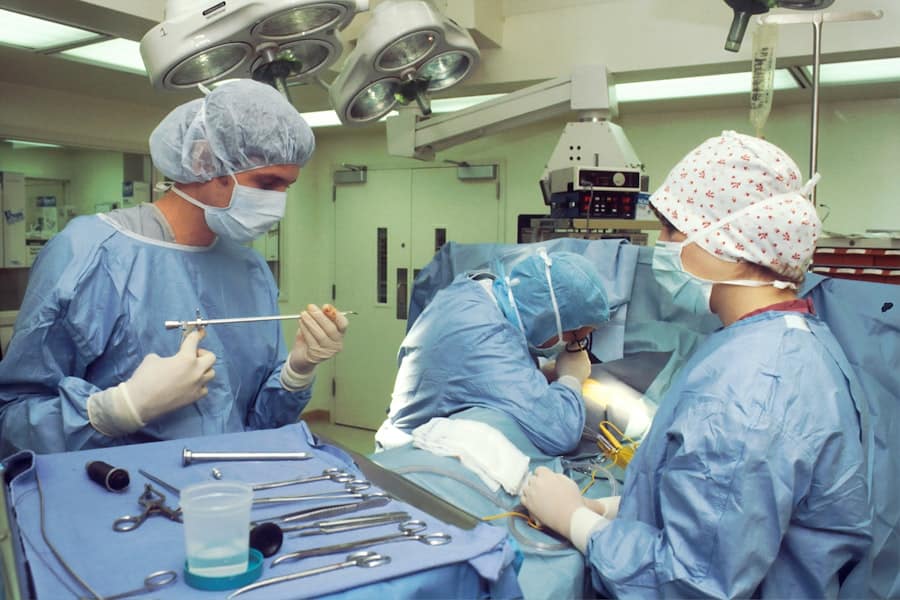
The planning phase of surgical procedures has traditionally been a meticulous process involving extensive review of imaging studies and preoperative assessments. However, AR is revolutionizing this preparatory stage by allowing surgeons to engage with 3D models of patient anatomy before entering the operating room. Surgeons can manipulate these models to simulate various approaches and techniques, enabling them to devise tailored strategies that account for individual patient variations.
For example, in orthopedic surgery, AR can assist surgeons in visualizing bone structures and joint mechanics before making incisions. By using AR to simulate the surgery on a digital twin of the patient’s anatomy, surgeons can identify potential challenges and refine their techniques accordingly. This proactive approach not only enhances the surgeon’s confidence but also minimizes intraoperative surprises, leading to more efficient procedures and reduced operative times.
The Impact of AR on Surgical Precision and Accuracy
Precision is a cornerstone of successful surgical outcomes, and AR technology significantly enhances this aspect of surgery. By providing real-time overlays of critical anatomical landmarks during procedures, AR allows surgeons to navigate with unprecedented accuracy. This capability is particularly beneficial in delicate surgeries where even minor deviations can lead to significant complications.
In neurosurgery, for instance, AR can project vital information directly onto the patient’s skull during craniotomies. Surgeons can visualize the exact location of tumors or other abnormalities while simultaneously seeing critical structures such as blood vessels and nerves. This integration of information helps prevent inadvertent damage to healthy tissue and improves overall surgical efficacy.
Studies have shown that surgeries augmented by AR can lead to reduced complication rates and shorter recovery times for patients.
Case Studies: Successful Surgical Procedures Using AR Technology
| Metric | Traditional Surgical Planning | AR-Enhanced Surgical Planning | Impact of AR |
|---|---|---|---|
| Preoperative Planning Time | 4-6 hours | 1-2 hours | Reduction by up to 60% |
| Accuracy of Anatomical Visualization | 2D imaging and physical models | 3D interactive holograms | Improved spatial understanding by 40% |
| Intraoperative Navigation Errors | 5-10 mm deviation | 1-3 mm deviation | Reduction in error by up to 70% |
| Surgeon Cognitive Load | High due to multiple data sources | Integrated AR display | Reduced cognitive load by 30% |
| Procedure Duration | Average 3-5 hours | Average 2-3 hours | Time savings of 20-40% |
| Patient Outcomes (Complication Rate) | 10-15% | 5-7% | Complication rate reduced by up to 50% |
| Training Efficiency for Surgeons | Months to years | Weeks to months with AR simulation | Training time reduced by 50-70% |
Several case studies illustrate the successful application of AR technology in surgical procedures across various specialties. One notable example occurred in a complex spinal surgery where a surgeon utilized AR to visualize the patient’s vertebrae in 3D during the operation. By overlaying digital images onto the patient’s anatomy, the surgeon was able to accurately place screws and rods with minimal invasiveness.
The result was a successful outcome with reduced recovery time compared to traditional methods. Another compelling case involved a team of surgeons performing a liver resection using AR technology. The surgeons employed augmented reality to visualize blood vessels and bile ducts in real-time while operating on a patient with liver cancer.
The ability to see these structures overlaid on the patient’s anatomy allowed for precise dissection and minimized blood loss during the procedure. Postoperative assessments revealed that the patient experienced fewer complications and a quicker return to normal activities.
The Future of AR in Surgical Planning and Execution
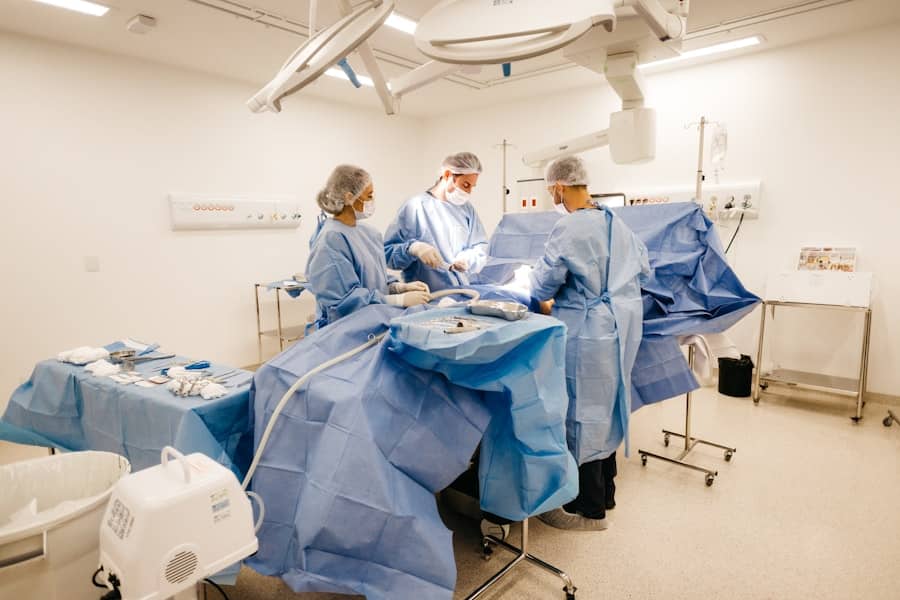
As technology continues to advance, the future of AR in surgical planning and execution appears promising. Ongoing research and development are focused on enhancing the capabilities of AR systems, including improved image resolution, faster processing speeds, and more intuitive user interfaces. These advancements will likely lead to broader adoption of AR technologies across various surgical specialties.
Furthermore, as machine learning and artificial intelligence become increasingly integrated with AR systems, surgeons may benefit from predictive analytics that can inform decision-making during procedures. For instance, AI algorithms could analyze historical data from previous surgeries to suggest optimal approaches based on specific patient characteristics. This synergy between AR and AI has the potential to further elevate surgical precision and outcomes.
Challenges and Limitations of AR in Surgical Procedures
Despite its many advantages, the implementation of AR in surgical procedures is not without challenges. One significant limitation is the need for high-quality imaging data to create accurate 3D models.
Surgeons must be cautious when relying on augmented reality if the underlying data does not accurately represent the patient’s anatomy.
Surgeons must undergo training to effectively utilize these technologies, which may require time and resources that some institutions may not readily have available.
Furthermore, there are concerns regarding the reliability of AR systems in high-stakes environments where any malfunction could have serious consequences.
The Potential of AR to Transform the Future of Surgery
The potential for augmented reality to transform surgical practices is immense. As this technology continues to evolve and integrate into clinical settings, it promises to enhance surgical precision, improve patient outcomes, and streamline workflows within operating rooms. While challenges remain regarding implementation and training, ongoing advancements in imaging technology and software development are likely to address these issues over time.
As healthcare professionals embrace augmented reality as a standard tool in surgical planning and execution, we may witness a new era in surgery characterized by enhanced collaboration among surgical teams, improved patient safety, and ultimately better health outcomes for patients worldwide. The journey toward fully realizing the potential of AR in surgery is just beginning, but its impact on the field is already becoming evident through successful case studies and innovative applications across various specialties.
Augmented Reality (AR) is transforming the landscape of surgical planning and execution, offering surgeons enhanced visualization and precision during procedures. For those interested in how technology is shaping various fields, a related article on the best laptops for architects can provide insights into the tools that support design and planning in architecture, much like AR does in surgery. You can read more about it here: The Best Laptop for Architects.
FAQs
What is Augmented Reality (AR) in surgical planning and execution?
Augmented Reality (AR) in surgical planning and execution refers to the use of technology that overlays digital information, such as 3D anatomical models or real-time data, onto the surgeon’s view of the patient. This enhances visualization and precision during both preoperative planning and actual surgical procedures.
How does AR improve surgical planning?
AR improves surgical planning by allowing surgeons to visualize complex anatomical structures in three dimensions before the operation. This helps in better understanding patient-specific anatomy, identifying potential challenges, and strategizing the surgical approach more effectively.
In what ways does AR assist during surgery?
During surgery, AR provides real-time guidance by projecting critical information directly onto the surgical field. This can include highlighting vital structures, guiding instrument placement, and offering step-by-step procedural assistance, which enhances accuracy and reduces the risk of errors.
What types of surgeries benefit most from AR technology?
AR technology is particularly beneficial in complex surgeries such as neurosurgery, orthopedic procedures, cardiovascular interventions, and minimally invasive surgeries, where precise navigation and detailed anatomical visualization are crucial.
Does AR technology reduce surgery time and improve outcomes?
Yes, AR has been shown to potentially reduce surgery time by improving efficiency and precision. It also contributes to better surgical outcomes by minimizing complications, reducing the likelihood of errors, and enhancing overall procedural accuracy.
Is AR technology widely available in hospitals today?
While AR technology is increasingly being adopted, its availability varies depending on the healthcare facility’s resources and technological infrastructure. Many leading medical centers and research institutions have integrated AR into their surgical practices, but widespread adoption is still growing.
Are there any risks associated with using AR in surgery?
AR technology itself is generally safe; however, risks may arise from technical issues such as software glitches, hardware malfunctions, or inaccurate data overlays. Proper training and system validation are essential to mitigate these risks.
What equipment is required to use AR in surgical procedures?
Using AR in surgery typically requires specialized hardware such as AR headsets or smart glasses, high-resolution imaging systems, and software platforms capable of processing and displaying 3D models and real-time data during the procedure.
How does AR compare to traditional surgical navigation systems?
AR offers a more intuitive and immersive experience by overlaying information directly onto the surgeon’s view, whereas traditional navigation systems often require looking away at separate monitors. This can improve hand-eye coordination and situational awareness during surgery.
What is the future outlook for AR in surgical planning and execution?
The future of AR in surgery is promising, with ongoing advancements in hardware, software, and artificial intelligence expected to further enhance its capabilities. Increased adoption is anticipated as technology becomes more affordable and integrated into standard surgical workflows.