

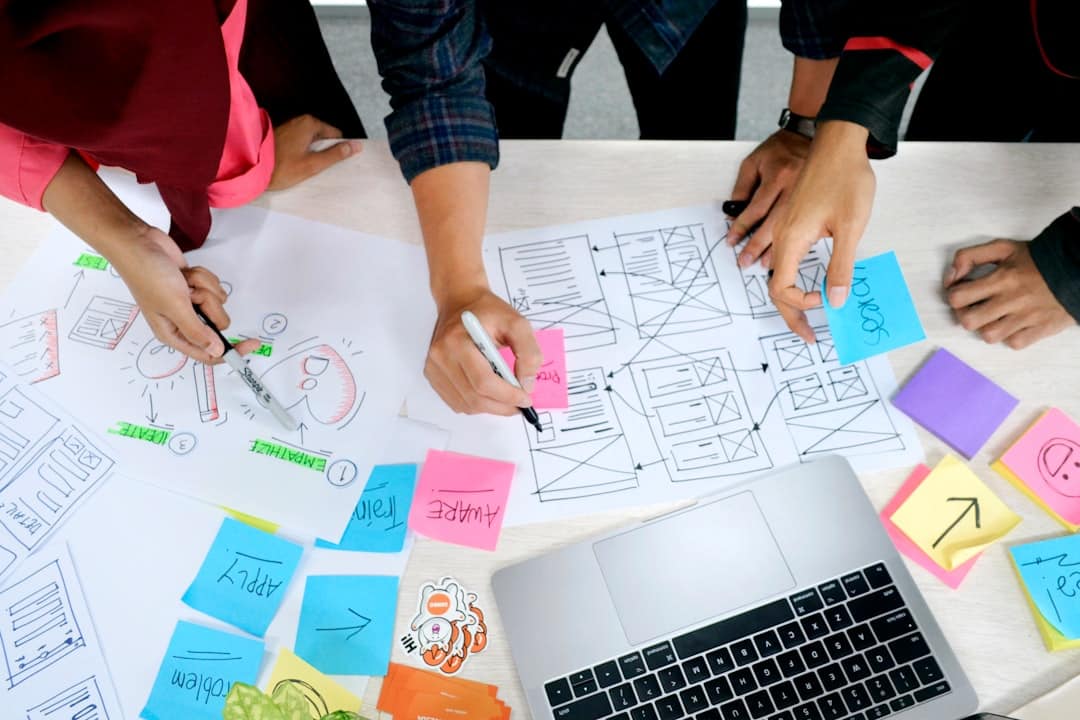
Augmented Reality (AR) and Virtual Reality (VR) have emerged as transformative technologies in various fields, with product design being one of the most significantly impacted areas. These technologies offer designers innovative tools to visualize, create, and refine products in ways that were previously unimaginable. AR overlays digital information onto the real world, allowing designers to see how a product will look and function in its intended environment.
Conversely, VR immerses users in a completely virtual space, enabling them to interact with 3D models and simulations as if they were real objects. This duality of experience not only enhances creativity but also streamlines the design process, making it more efficient and effective. The integration of AR and VR into product design is not merely a trend; it represents a paradigm shift in how products are conceptualized and developed.
As industries increasingly recognize the potential of these technologies, they are being adopted across various sectors, from consumer electronics to automotive design. The ability to visualize complex designs in real-time and make adjustments on the fly has revolutionized traditional design methodologies. Designers can now engage with their creations in a more tactile and intuitive manner, leading to better outcomes and more innovative solutions.
Key Takeaways
- AR and VR technologies are transforming product design by enabling immersive visualization and interaction.
- These tools enhance collaboration and communication among design teams, improving workflow efficiency.
- AR and VR streamline prototyping and testing, reducing time and costs associated with physical models.
- They allow for greater customization and personalization, tailoring products to user preferences.
- Despite challenges, AR and VR hold significant potential for the future, driving innovation in product design.
The Impact of AR and VR on the Design Process
The design process has traditionally been linear, often involving multiple stages of drafting, prototyping, and testing. However, AR and VR have introduced a more iterative approach that allows for continuous feedback and refinement. For instance, designers can create a 3D model of a product and immediately visualize it in a real-world context using AR.
This capability enables them to assess proportions, colors, and materials without the need for physical prototypes. By overlaying digital models onto actual environments, designers can make informed decisions early in the process, reducing the risk of costly mistakes later on. Moreover, VR facilitates immersive experiences that allow designers to step inside their creations.
For example, an automotive designer can use VR to simulate the interior of a vehicle, experiencing the layout and ergonomics firsthand. This level of immersion provides insights that static images or traditional CAD software cannot offer. Designers can explore different configurations and user interactions within a virtual space, leading to more user-centered designs.
The ability to visualize products in a fully immersive environment fosters creativity and encourages experimentation, ultimately resulting in more innovative designs.
Enhancing Collaboration and Communication with AR and VR
Collaboration is a cornerstone of successful product design, often requiring input from various stakeholders, including engineers, marketers, and end-users. AR and VR enhance this collaborative process by providing shared virtual spaces where team members can interact with 3D models in real-time. For instance, a design team spread across different geographical locations can come together in a virtual environment to discuss a new product concept.
They can manipulate the model collaboratively, making adjustments based on collective feedback instantaneously. Additionally, AR can bridge communication gaps between technical teams and non-technical stakeholders. By using AR applications, designers can present their ideas in an engaging manner that is easily understood by clients or executives who may not have a technical background.
For example, an architect can use AR to project a building design onto a physical site, allowing clients to visualize the project in context. This interactive presentation fosters better understanding and alignment among stakeholders, ultimately leading to more successful project outcomes.
Streamlining Prototyping and Testing with AR and VR
Prototyping is an essential phase in product design, traditionally involving time-consuming processes that require materials, labor, and resources. AR and VR streamline this phase by enabling rapid prototyping through digital simulations. Designers can create virtual prototypes that can be tested for functionality and aesthetics without the need for physical materials.
This not only saves time but also reduces costs associated with material waste and labor. For example, in the fashion industry, designers can use VR to create virtual garments that can be “worn” by avatars in a simulated environment. This allows for immediate feedback on fit and style without the need for physical samples.
Similarly, in consumer electronics, companies can develop virtual prototypes of devices that users can interact with before any physical production begins. This approach allows for extensive testing of user interfaces and ergonomics, ensuring that products meet user expectations before they hit the market.
Customization and Personalization in Product Design with AR and VR
| Metric | AR Impact | VR Impact | Example |
|---|---|---|---|
| Design Iteration Speed | Reduces time by up to 30% through real-time overlay of design changes | Accelerates prototyping by 40% with immersive 3D modeling | Automotive companies using AR to visualize parts on physical models |
| Cost Reduction | Decreases physical prototype costs by 25% via virtual overlays | Reduces need for multiple physical prototypes by 50% | Consumer electronics firms simulating devices in VR before production |
| User Experience Testing | Enables contextual testing in real environments | Provides fully immersive user interaction scenarios | Furniture designers using AR to test placement in homes |
| Collaboration Efficiency | Improves remote collaboration by 35% with shared AR views | Enhances team design sessions by 45% through virtual meeting spaces | Global design teams co-creating in VR environments |
| Customer Engagement | Increases engagement by 20% with interactive product previews | Boosts customer feedback quality by 30% via immersive demos | Retailers offering AR try-before-you-buy experiences |
The demand for customization has grown significantly as consumers seek products that reflect their individual preferences and lifestyles. AR and VR technologies enable designers to offer personalized experiences that cater to these demands. With AR applications, users can visualize how different colors, materials, or features will look on a product before making a purchase decision.
For instance, furniture retailers have adopted AR tools that allow customers to see how a piece of furniture would fit into their home environment, complete with customizable options. In addition to enhancing customer engagement, these technologies empower designers to create products that are tailored to specific user needs. For example, in the automotive industry, manufacturers can use VR to allow customers to customize vehicle features such as interior layouts or exterior colors in real-time.
This level of personalization not only enhances customer satisfaction but also fosters brand loyalty as consumers feel more connected to products that reflect their unique tastes.
Improving User Experience and Feedback with AR and VR
User experience (UX) is paramount in product design, as it directly influences customer satisfaction and product success. AR and VR provide designers with powerful tools to gather user feedback throughout the design process. By creating immersive experiences that simulate real-world interactions with products, designers can observe how users engage with their designs in a controlled environment.
This feedback is invaluable for identifying pain points or areas for improvement. For instance, tech companies often use VR simulations to test new software interfaces before launch. Users can navigate through the interface while designers observe their interactions in real-time.
This allows for immediate adjustments based on user behavior, ensuring that the final product is intuitive and user-friendly. Furthermore, AR applications can facilitate user testing by overlaying digital prompts or instructions onto physical products during trials, guiding users through features while collecting data on their interactions.
Overcoming Challenges and Limitations of AR and VR in Product Design
Despite the numerous advantages of AR and VR in product design, several challenges remain that must be addressed for widespread adoption. One significant limitation is the cost associated with developing high-quality AR and VR experiences. Creating realistic simulations requires advanced hardware and software capabilities that may not be accessible to all design teams or organizations.
Smaller companies may struggle to justify the investment needed to implement these technologies effectively. Another challenge lies in user acceptance and familiarity with AR and VR tools. While younger generations may be more inclined to embrace these technologies, older users or those less tech-savvy may find them intimidating or difficult to navigate.
Designers must consider these factors when integrating AR and VR into their processes, ensuring that they provide adequate training and support for all users involved in the design process.
The Future of AR and VR in Product Design
Looking ahead, the future of AR and VR in product design appears promising as technology continues to evolve at an unprecedented pace. Advancements in hardware capabilities will likely lead to more affordable solutions that democratize access to these tools across various industries. As AR glasses become more lightweight and user-friendly, we may see an increase in their application within design workflows, allowing for seamless integration of digital elements into physical spaces.
Moreover, as artificial intelligence (AI) becomes increasingly integrated with AR and VR technologies, we can expect even more sophisticated design tools that adapt to user preferences and behaviors. AI-driven analytics could provide designers with deeper insights into user interactions within virtual environments, enabling them to create even more tailored experiences. The convergence of these technologies will likely redefine product design paradigms, fostering innovation while enhancing collaboration across teams.
In conclusion, as AR and VR continue to mature within the realm of product design, they will undoubtedly reshape how designers conceptualize, develop, and refine their creations. The potential for enhanced collaboration, streamlined prototyping processes, personalized experiences, and improved user feedback positions these technologies as essential components of modern design practices. As challenges are addressed and technology advances further, we can anticipate a future where AR and VR become integral tools for every designer seeking to push the boundaries of creativity and innovation.
As augmented reality (AR) and virtual reality (VR) continue to revolutionize product design, it’s essential to stay informed about the latest trends shaping the industry.
This article provides valuable insights that complement the discussion on how AR and VR are transforming product design. You can find it here: What Trends Are Predicted for 2023.
FAQs
What is the difference between AR and VR in product design?
Augmented Reality (AR) overlays digital information onto the real world, allowing designers to see virtual elements integrated with physical environments. Virtual Reality (VR), on the other hand, immerses users in a fully digital environment, enabling designers to interact with 3D models in a simulated space.
How does AR improve the product design process?
AR allows designers to visualize and manipulate 3D models in real-world settings, facilitating better spatial understanding and collaboration. It helps in identifying design flaws early, reducing the need for physical prototypes, and speeding up decision-making.
In what ways does VR enhance product design?
VR provides an immersive experience where designers can explore and test products in a virtual environment. It enables detailed inspection, ergonomic assessments, and user experience testing without the cost and time associated with physical prototypes.
Can AR and VR reduce the cost of product development?
Yes, by enabling virtual prototyping and early detection of design issues, AR and VR reduce the reliance on physical prototypes, lower material waste, and shorten development cycles, leading to significant cost savings.
Are AR and VR technologies accessible to small and medium-sized enterprises (SMEs)?
Advancements in hardware and software have made AR and VR more affordable and user-friendly, allowing SMEs to adopt these technologies for product design, although initial investment and training may still be required.
What industries benefit most from AR and VR in product design?
Industries such as automotive, aerospace, consumer electronics, fashion, and architecture widely benefit from AR and VR by improving design accuracy, enhancing collaboration, and accelerating innovation.
Do AR and VR require specialized skills for product designers?
While basic familiarity with AR and VR tools is increasingly common, effective use often requires training in 3D modeling, software operation, and understanding of immersive technologies to maximize their potential in product design.
How do AR and VR facilitate collaboration in product design?
These technologies enable remote teams to interact with 3D models in real-time, share feedback instantly, and make collaborative decisions regardless of physical location, enhancing communication and reducing development time.
What are the limitations of using AR and VR in product design?
Limitations include hardware costs, potential technical challenges, the need for specialized skills, and sometimes limited realism or resolution in virtual environments, which can affect the accuracy of design evaluations.
How are AR and VR expected to evolve in the future of product design?
Future developments may include more intuitive interfaces, higher fidelity simulations, integration with AI for automated design suggestions, and broader accessibility, further transforming how products are conceptualized and developed.