

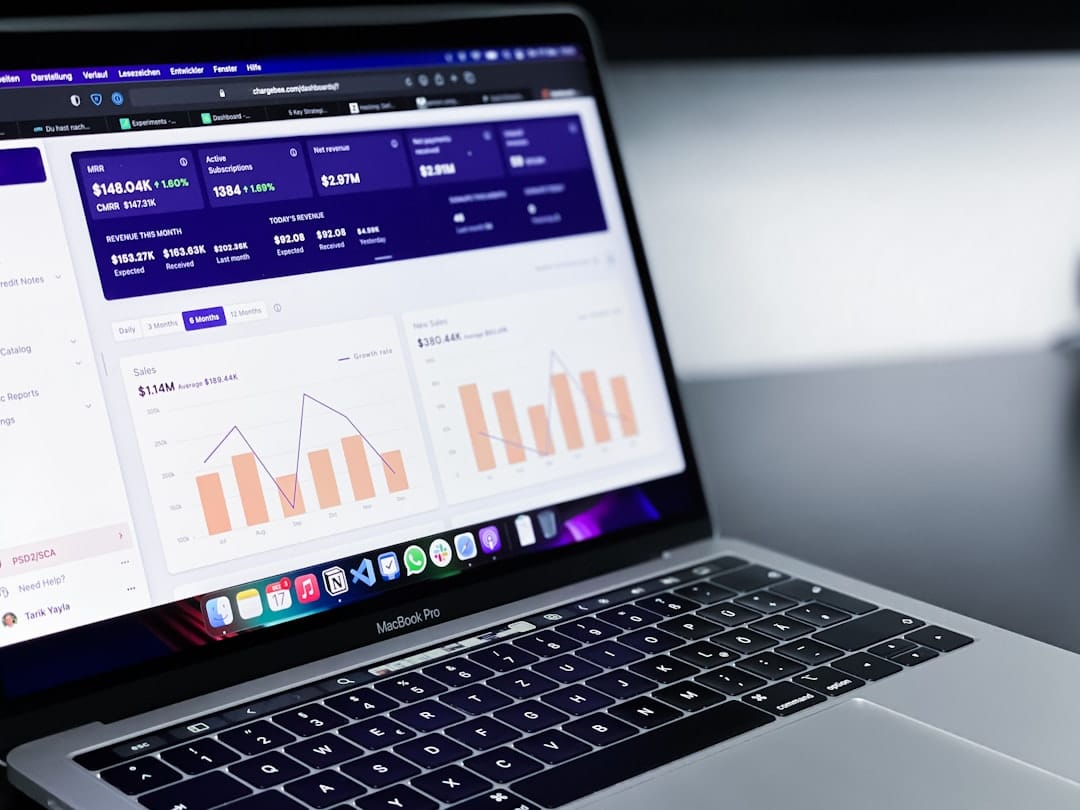
Data analysis has experienced significant changes in recent years due to developments in artificial intelligence (AI).
This approach allows organizations to derive more comprehensive insights from their data, automate decision-making procedures, and improve operational efficiency.
As businesses depend more heavily on data for strategic planning, implementing AI-powered analytics has become necessary for competitive advantage. The growth of big data has required changes to traditional analytics approaches. Standard analytics methods often cannot effectively process the large volume, speed, and diversity of data produced in current digital environments.
AI-powered analytics solves these problems by using algorithms that identify patterns in data and generate predictions or recommendations from these findings. This functionality enables organizations to progress from descriptive analytics, which summarizes past data, to predictive and prescriptive analytics that project future patterns and recommend specific actions.
Key Takeaways
- AI-powered analytics enhances business intelligence by providing deeper insights and predictive capabilities.
- Machine learning is a core component, enabling automated data analysis and pattern recognition.
- Various industries benefit from AI analytics, including healthcare, finance, retail, and manufacturing.
- Challenges include data quality, privacy concerns, and the need for skilled personnel.
- Implementing best practices ensures effective use of AI analytics for gaining a competitive edge.
The Impact of AI-Powered Analytics on Business Intelligence
The integration of AI-powered analytics into business intelligence (BI) systems has revolutionized how organizations approach data-driven decision-making. Traditional BI tools often require significant manual input and expertise to interpret data, which can lead to delays and potential inaccuracies in reporting. In contrast, AI-powered analytics automates many of these processes, enabling real-time insights that empower decision-makers to act swiftly and confidently.
For instance, companies can now utilize AI algorithms to analyze customer behavior patterns, allowing them to tailor marketing strategies and improve customer engagement effectively. Moreover, AI-powered analytics enhances the ability of organizations to identify trends and anomalies within their data. By employing advanced machine learning techniques, businesses can detect subtle shifts in consumer preferences or market dynamics that may not be immediately apparent through conventional analysis.
This capability is particularly valuable in industries such as retail, where understanding customer sentiment can directly influence inventory management and sales strategies. As a result, organizations that harness AI-powered analytics are better positioned to adapt to changing market conditions and capitalize on emerging opportunities.
The Role of Machine Learning in AI-Powered Analytics
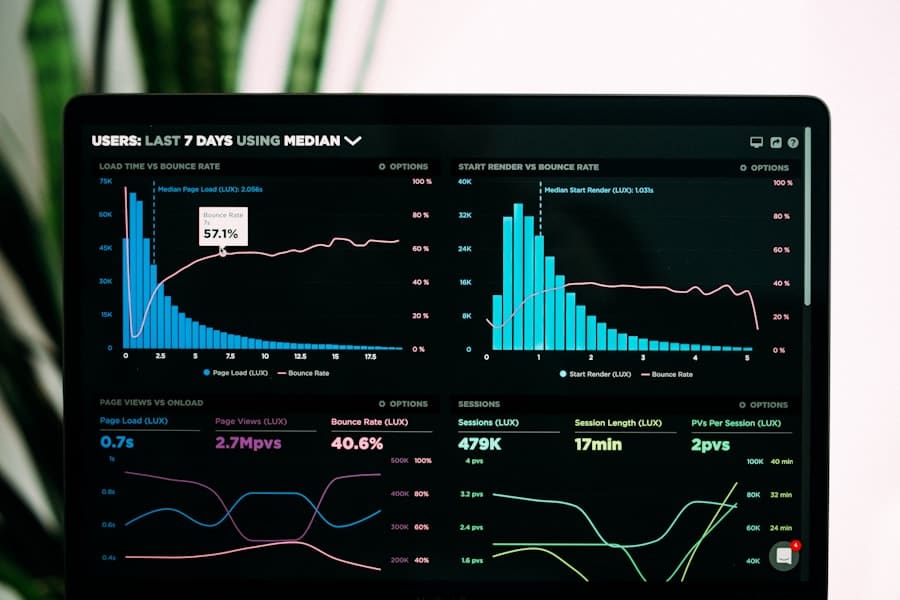
Machine learning (ML) serves as a cornerstone of AI-powered analytics, providing the algorithms and models that enable systems to learn from data without explicit programming. At its core, machine learning involves training algorithms on historical data sets so they can recognize patterns and make predictions about future outcomes. This process is particularly beneficial in scenarios where large volumes of data are involved, as it allows for the identification of complex relationships that would be challenging for human analysts to discern.
One prominent application of machine learning in AI-powered analytics is in predictive modeling. For example, financial institutions utilize ML algorithms to assess credit risk by analyzing a multitude of factors, including transaction history, demographic information, and economic indicators. By continuously learning from new data inputs, these models can improve their accuracy over time, leading to more informed lending decisions.
Additionally, machine learning can enhance customer segmentation efforts by identifying distinct groups within a customer base based on purchasing behavior, enabling more targeted marketing campaigns.
Applications of AI-Powered Analytics in Different Industries
AI-powered analytics has found applications across a diverse range of industries, each leveraging its capabilities to address unique challenges and drive innovation. In healthcare, for instance, AI algorithms analyze patient data to predict disease outbreaks or identify individuals at risk for certain conditions. By processing vast amounts of medical records and real-time health data, healthcare providers can implement preventive measures and allocate resources more effectively.
In the manufacturing sector, AI-powered analytics plays a crucial role in optimizing supply chain management. By analyzing production data alongside external factors such as market demand and supplier performance, manufacturers can forecast inventory needs more accurately and reduce waste. Companies like Siemens have implemented AI-driven predictive maintenance systems that analyze equipment performance data to anticipate failures before they occur, thereby minimizing downtime and maintenance costs.
The financial services industry also benefits significantly from AI-powered analytics. Investment firms utilize these technologies to analyze market trends and execute trades at optimal times based on predictive insights. Additionally, insurance companies employ AI algorithms to assess claims more efficiently by analyzing historical claims data and identifying fraudulent patterns.
These applications illustrate the versatility of AI-powered analytics across various sectors, highlighting its potential to drive efficiency and innovation.
Challenges and Limitations of AI-Powered Analytics
| Metric | Before AI-Powered Analytics | After AI-Powered Analytics | Impact |
|---|---|---|---|
| Data Processing Speed | Hours to days | Minutes to seconds | Significantly faster insights generation |
| Accuracy of Forecasts | 65-75% | 85-95% | Improved decision-making reliability |
| Data Volume Handled | Limited to structured data | Structured + unstructured data | Broader data sources analyzed |
| Time to Identify Trends | Weeks | Hours | Faster market responsiveness |
| User Accessibility | Requires technical expertise | Self-service dashboards & natural language queries | Wider adoption across departments |
| Cost Efficiency | High manual analysis costs | Automated insights reduce labor | Lower operational expenses |
| Personalization of Insights | Generic reports | Customized, role-based insights | Enhanced relevance and actionability |
Despite its numerous advantages, the implementation of AI-powered analytics is not without challenges. One significant hurdle is the quality and availability of data. For AI algorithms to function effectively, they require large volumes of high-quality data for training purposes.
In many organizations, data may be siloed across different departments or stored in incompatible formats, making it difficult to aggregate and analyze comprehensively. This fragmentation can hinder the effectiveness of AI models and lead to suboptimal decision-making. Another challenge lies in the interpretability of AI-driven insights.
While machine learning models can produce highly accurate predictions, they often operate as “black boxes,” making it difficult for users to understand how decisions are made. This lack of transparency can create trust issues among stakeholders who may be hesitant to rely on automated systems without a clear understanding of their underlying logic. Organizations must invest in developing explainable AI solutions that provide insights into how models arrive at their conclusions while ensuring compliance with regulatory standards.
The Future of AI-Powered Analytics in Business Intelligence

Looking ahead, the future of AI-powered analytics in business intelligence appears promising as technology continues to evolve. One anticipated trend is the increasing integration of natural language processing (NLP) capabilities into analytics platforms. NLP allows users to interact with data using conversational language rather than complex queries or coding languages.
This democratization of data access will empower non-technical users to derive insights independently, fostering a culture of data-driven decision-making across organizations. Additionally, advancements in edge computing are likely to enhance the capabilities of AI-powered analytics by enabling real-time processing of data closer to its source. This shift will be particularly beneficial for industries such as manufacturing and logistics, where timely insights are critical for operational efficiency.
By processing data at the edge rather than relying solely on centralized cloud systems, organizations can respond more rapidly to changing conditions and optimize their operations accordingly.
Best Practices for Implementing AI-Powered Analytics
To successfully implement AI-powered analytics within an organization, several best practices should be considered. First and foremost is the establishment of a clear strategy that aligns with business objectives. Organizations must identify specific use cases where AI-powered analytics can deliver tangible value and prioritize these initiatives accordingly.
This strategic focus ensures that resources are allocated effectively and that stakeholders remain engaged throughout the implementation process. Another critical aspect is fostering a culture of collaboration between data scientists and business users. Effective communication between these groups is essential for translating analytical insights into actionable strategies.
Organizations should invest in training programs that equip employees with the skills needed to interpret and leverage AI-driven insights effectively. Furthermore, creating cross-functional teams that include representatives from various departments can facilitate knowledge sharing and promote a holistic approach to data analysis.
Leveraging AI-Powered Analytics for Competitive Advantage
As organizations navigate an increasingly complex business environment characterized by rapid technological advancements and shifting consumer expectations, leveraging AI-powered analytics has emerged as a key differentiator. By harnessing the power of artificial intelligence and machine learning, businesses can unlock valuable insights from their data that drive informed decision-making and foster innovation. While challenges remain in terms of data quality and interpretability, proactive strategies focused on collaboration and transparency can mitigate these issues.
Ultimately, organizations that embrace AI-powered analytics stand to gain a significant competitive advantage in their respective markets. By continuously refining their analytical capabilities and adapting to emerging trends, businesses can position themselves at the forefront of their industries, ready to seize new opportunities as they arise.
In the rapidly evolving landscape of business intelligence, the integration of AI-powered analytics is proving to be a game-changer. For those interested in exploring how technology is shaping various sectors, a related article on marketing technologies for 2023 can provide valuable insights. You can read more about it in this article: What Are the Marketing Technologies for 2023?. This piece delves into the tools and strategies that are enhancing marketing efforts, paralleling the transformative impact of AI in business intelligence.
FAQs
What is AI-powered analytics?
AI-powered analytics refers to the use of artificial intelligence technologies, such as machine learning and natural language processing, to analyze data and generate insights automatically. It enhances traditional analytics by enabling faster, more accurate, and deeper data interpretation.
How does AI improve business intelligence?
AI improves business intelligence by automating data processing, identifying patterns and trends that may be missed by humans, providing predictive insights, and enabling real-time decision-making. This leads to more informed strategies and better business outcomes.
What are the key benefits of using AI in business intelligence?
Key benefits include increased efficiency in data analysis, enhanced accuracy of insights, the ability to handle large and complex datasets, predictive analytics capabilities, and improved decision-making speed and quality.
Can AI-powered analytics be integrated with existing BI tools?
Yes, AI-powered analytics can often be integrated with existing business intelligence platforms and tools. Many BI vendors now offer AI features or allow integration with AI services to enhance their analytics capabilities.
What types of businesses can benefit from AI-powered analytics?
Businesses of all sizes and industries can benefit from AI-powered analytics, including retail, finance, healthcare, manufacturing, and marketing. Any organization that relies on data-driven decision-making can leverage AI to improve its business intelligence.
Are there any challenges associated with AI-powered analytics?
Challenges include data quality and privacy concerns, the need for skilled personnel to manage AI systems, potential biases in AI algorithms, and the initial cost and complexity of implementation.
How does AI-powered analytics handle big data?
AI-powered analytics uses advanced algorithms and computing power to process and analyze large volumes of data quickly and efficiently, uncovering insights that would be difficult or impossible to detect manually.
Is AI-powered analytics suitable for real-time decision-making?
Yes, AI-powered analytics can process data in real time, enabling businesses to make timely decisions based on the most current information available.
What role does machine learning play in AI-powered analytics?
Machine learning enables AI systems to learn from data patterns and improve their analytical models over time without explicit programming, enhancing the accuracy and relevance of business intelligence insights.
How can businesses get started with AI-powered analytics?
Businesses can start by assessing their data infrastructure, identifying key use cases, selecting appropriate AI analytics tools or platforms, and investing in training or hiring skilled personnel to manage and interpret AI-driven insights.