

The integration of artificial intelligence (AI) into the workplace has transformed the landscape of various industries, marking a significant shift in how businesses operate. Over the past decade, advancements in machine learning, natural language processing, and robotics have enabled organizations to leverage AI technologies to enhance efficiency, reduce costs, and improve decision-making processes. Companies that once relied heavily on manual labor and traditional methods are now embracing AI-driven solutions to stay competitive in an increasingly digital world.
This evolution is not merely a trend; it represents a fundamental change in the way work is performed, with implications that extend beyond mere automation. As AI continues to evolve, its applications in the workplace are becoming more sophisticated. From predictive analytics that inform strategic decisions to intelligent virtual assistants that manage schedules and communications, AI is reshaping the roles of employees across various sectors.
The rise of AI has also prompted discussions about the future of work, including concerns about job displacement and the need for reskilling the workforce. However, rather than replacing human workers, AI is often seen as a tool that can augment human capabilities, allowing employees to focus on higher-value tasks that require creativity, critical thinking, and emotional intelligence.
Key Takeaways
- AI is increasingly integrated into various workplace functions, transforming traditional roles.
- Administrative tasks are becoming more efficient through AI-driven automation.
- Customer service is enhanced by AI-powered support systems providing faster responses.
- AI improves data entry accuracy and accelerates data analysis processes.
- The future workplace will see deeper AI integration, boosting productivity and innovation across industries.
Streamlining Administrative Tasks with AI
Administrative tasks have long been a significant burden for organizations, consuming valuable time and resources that could be better spent on strategic initiatives. AI technologies are now being deployed to streamline these tasks, automating processes such as scheduling meetings, managing emails, and organizing documents. For instance, AI-powered tools like chatbots can handle routine inquiries from employees or clients, freeing up administrative staff to focus on more complex issues that require human intervention.
This not only enhances efficiency but also improves response times and overall service quality. Moreover, AI can analyze vast amounts of data to identify patterns and trends that inform administrative decision-making. For example, AI algorithms can optimize resource allocation by predicting peak times for certain tasks or identifying areas where additional support is needed.
By automating repetitive tasks and providing actionable insights, AI empowers administrative professionals to work more effectively and strategically. This shift not only enhances productivity but also contributes to a more agile organizational structure that can adapt quickly to changing business needs.
Automating Customer Service and Support

Customer service is another area where AI has made significant inroads, fundamentally changing how businesses interact with their clients. The advent of AI-driven chatbots and virtual assistants has revolutionized customer support by providing instant responses to inquiries and resolving issues around the clock. These systems can handle a wide range of queries, from simple FAQs to more complex troubleshooting scenarios, often with a level of efficiency that surpasses human agents.
This not only improves customer satisfaction by reducing wait times but also allows human representatives to focus on more nuanced interactions that require empathy and understanding. In addition to chatbots, AI can analyze customer interactions to identify common pain points and areas for improvement. By leveraging natural language processing, businesses can gain insights into customer sentiment and preferences, enabling them to tailor their services accordingly.
For example, an e-commerce platform might use AI to analyze customer feedback and adjust its product offerings or marketing strategies based on emerging trends. This data-driven approach not only enhances the customer experience but also drives business growth by aligning services with customer needs.
AI’s Impact on Data Entry and Analysis
Data entry has traditionally been a labor-intensive process fraught with the potential for human error. However, AI technologies are transforming this landscape by automating data capture and analysis. Optical character recognition (OCR) systems can convert scanned documents into editable text, while machine learning algorithms can categorize and analyze data at unprecedented speeds.
This automation not only reduces the time required for data entry but also enhances accuracy by minimizing the risk of errors associated with manual input. Furthermore, AI’s analytical capabilities allow organizations to derive meaningful insights from their data more efficiently than ever before. Advanced analytics tools can sift through vast datasets to identify trends, correlations, and anomalies that might go unnoticed by human analysts.
For instance, a financial institution might use AI to analyze transaction data for signs of fraud or to assess credit risk more accurately. By harnessing the power of AI in data entry and analysis, organizations can make informed decisions based on real-time insights, ultimately driving better business outcomes.
Enhancing Employee Productivity with AI
| Task Category | Example Tasks | AI Automation Tools | Impact on Efficiency | Time Saved (%) |
|---|---|---|---|---|
| Data Entry | Inputting customer info, invoice processing | RPA (Robotic Process Automation), OCR (Optical Character Recognition) | Reduces manual errors and speeds up processing | 70% |
| Customer Support | Answering FAQs, ticket triaging | Chatbots, AI-powered virtual assistants | 24/7 availability and faster response times | 60% |
| Scheduling & Calendar Management | Meeting coordination, reminders | AI schedulers, smart calendar apps | Eliminates back-and-forth emails | 50% |
| Document Processing | Contract analysis, report generation | Natural Language Processing (NLP), AI summarizers | Speeds up review and reduces manual reading | 65% |
| Inventory Management | Stock monitoring, reorder alerts | AI forecasting, IoT sensors | Optimizes stock levels and reduces shortages | 55% |
The introduction of AI into the workplace has profound implications for employee productivity. By automating routine tasks and providing intelligent assistance, AI enables employees to focus on higher-value activities that require creativity and critical thinking. For example, project management tools powered by AI can help teams prioritize tasks based on deadlines and resource availability, ensuring that projects stay on track without overwhelming team members with administrative burdens.
Moreover, AI can facilitate collaboration among employees by providing insights into team dynamics and performance metrics. Tools that analyze communication patterns can identify bottlenecks in workflows or highlight areas where additional support may be needed. This data-driven approach fosters a culture of continuous improvement, where employees are empowered to optimize their work processes based on real-time feedback.
As a result, organizations that embrace AI not only enhance individual productivity but also cultivate a more engaged and motivated workforce.
The Role of AI in Streamlining Manufacturing and Production Processes

In the manufacturing sector, AI is playing a pivotal role in optimizing production processes and enhancing operational efficiency. Smart factories equipped with IoT devices and AI algorithms can monitor equipment performance in real-time, predicting maintenance needs before they lead to costly downtime. For instance, predictive maintenance systems analyze data from machinery sensors to identify patterns indicative of potential failures, allowing manufacturers to schedule maintenance proactively rather than reactively.
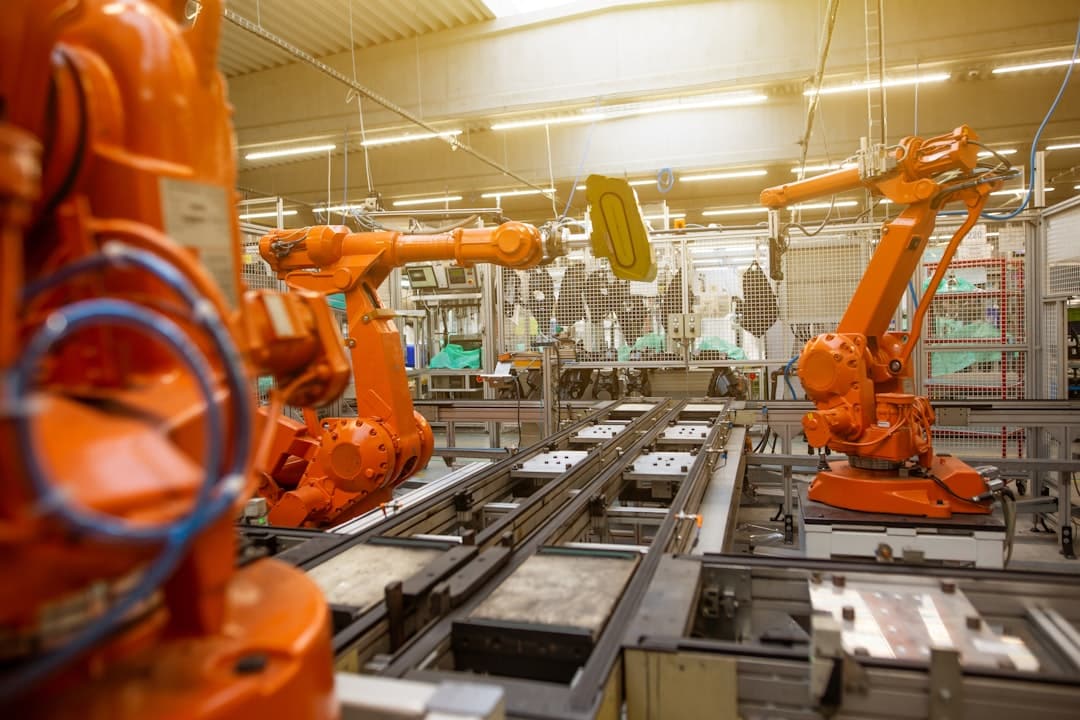
Additionally, AI-driven robotics are revolutionizing assembly lines by performing repetitive tasks with precision and speed that surpass human capabilities. These robots can adapt to changes in production schedules or product designs without extensive reprogramming, making them highly versatile assets in modern manufacturing environments. By integrating AI into production processes, manufacturers can achieve higher levels of efficiency while reducing waste and improving product quality.
AI’s Influence on Marketing and Sales Automation
The marketing landscape has been significantly transformed by the advent of AI technologies that enable businesses to automate various aspects of their marketing strategies. From targeted advertising campaigns to personalized content recommendations, AI allows marketers to reach their audiences more effectively than ever before. Machine learning algorithms analyze consumer behavior data to identify trends and preferences, enabling businesses to tailor their messaging accordingly.
For example, email marketing platforms powered by AI can segment audiences based on their interactions with previous campaigns, ensuring that recipients receive content that resonates with their interests. Additionally, chatbots can engage potential customers on websites or social media platforms, guiding them through the sales funnel while collecting valuable data for future marketing efforts. By leveraging AI in marketing and sales automation, organizations can enhance customer engagement and drive conversions more efficiently.
The Future of AI in the Workplace
As we look ahead, the future of AI in the workplace appears promising yet complex. The continued evolution of AI technologies will likely lead to even greater integration into various business functions, further enhancing efficiency and productivity across industries. However, this rapid advancement also raises important questions about ethics, job displacement, and the need for reskilling initiatives.
Organizations will need to navigate these challenges thoughtfully as they adopt AI solutions.
Companies that prioritize employee training and development will be better positioned to harness the full potential of AI technologies while fostering a culture of innovation and adaptability.
In conclusion, the rise of AI in the workplace is reshaping how businesses operate across multiple dimensions. From streamlining administrative tasks to enhancing customer service and automating data analysis, the impact of AI is profound and far-reaching. As organizations continue to embrace these technologies, they must remain vigilant about the ethical implications and workforce dynamics associated with this transformation.
The future holds immense potential for those willing to adapt and innovate in an increasingly automated world.
For further insights into the intersection of technology and leadership, you may find the article on
, and computer vision.</p>
<h3>How does AI handle data privacy and security when automating tasks?</h3>
<p>AI systems are designed with data encryption, access controls, and compliance with regulations like GDPR to ensure data privacy and security.</p>
<h3>What challenges might organizations face when implementing AI automation?</h3>
<p>Challenges include integration with existing systems, employee resistance, initial costs, data quality issues, and the need for ongoing maintenance and updates.</p>
<h3>How can businesses prepare their workforce for AI automation?</h3>
<p>Businesses can provide training, encourage upskilling, promote collaboration between humans and AI, and communicate transparently about changes.</p>
<h3>Is AI automation cost-effective for small businesses?</h3>
<p>AI automation can be cost-effective for small businesses by reducing labor costs and increasing efficiency, especially with scalable cloud-based AI solutions.</p>
<div class="clear"></div> </div>
<footer class="entry-meta">
<div class="entry-tax"><span>Tags: No tags</span></div>
<div class="aux-single-post-share">
<div class="aux-tooltip-socials aux-tooltip-dark aux-socials aux-icon-left aux-medium aux-tooltip-social-no-text" >
<span class="aux-icon auxicon-share" ></span>
</div>
</div>
</footer>
</div>
<nav class="aux-next-prev-posts nav-skin-thumb-arrow">
<section class="np-prev-section has-nav-thumb" >
<a href="https://enicomp.com/how-wearable-tech-is-transforming-fashion-and-functionality-3/">
<div class="np-arrow">
<div class="aux-hover-slide aux-arrow-nav aux-outline">
<span class="aux-svg-arrow aux-medium-left"></span>
<span class="aux-hover-arrow aux-svg-arrow aux-medium-left"></span>
</div>
<img width="80" height="80" src="https://enicomp.com/wp-content/uploads/2025/12/image-661-80x80.jpg" class="auxin-attachment auxin-featured-image attachment-80x80" alt="Photo Fashion" /> </div>
<p class="np-nav-text">Previous Post</p>
<h4 class="np-title">How Wearable Tech Is Transforming Fashion and Functionality</h4>
</a>
</section>
<section class="np-next-section has-nav-thumb" >
<a href="https://enicomp.com/how-blockchain-can-improve-auditing-and-accounting-processes/">
<div class="np-arrow">
<div class="aux-arrow-nav aux-hover-slide aux-outline">
<span class="aux-svg-arrow aux-medium-right"></span>
<span class="aux-hover-arrow aux-svg-arrow aux-medium-right"></span>
</div>
<img width="80" height="80" src="https://enicomp.com/wp-content/uploads/2025/12/image-666-80x80.jpg" class="auxin-attachment auxin-featured-image attachment-80x80" alt="Photo Auditing" /> </div>
<p class="np-nav-text">Next Post</p>
<h4 class="np-title">How Blockchain Can Improve Auditing and Accounting Processes</h4>
</a>
</section>
</nav>
</article>
</div><!-- end content -->
</div><!-- end primary -->
<aside class="aux-sidebar aux-sidebar-primary">
<div class="sidebar-inner">
<div class="sidebar-content">
<div class="aux-widget-area"><section id="block-4" class=" aux-open widget-container widget_block">
<h2 class="wp-block-heading">POPULAR</h2>
</section><section id="block-33" class=" aux-open widget-container widget_block">
<h2 class="wp-block-heading">CATEGORIES</h2>
</section><section id="categories-3" class=" aux-open widget-container widget_categories"><h3 class="widget-title">Categories</h3>
<ul>
<li class="cat-item cat-item-162"><a href="https://enicomp.com/category/5g-wireless-communication-technologies/">5G, Wireless & Communication Technologies</a> (178)
<ul class=)