


Reinforcement Learning (RL) is a subfield of machine learning that focuses on how agents ought to take actions in an environment to maximize cumulative rewards. Unlike supervised learning, where the model learns from labeled data, RL operates on the principle of trial and error. An agent interacts with its environment, receiving feedback in the form of rewards or penalties based on its actions.
This feedback loop allows the agent to learn optimal strategies over time, making RL particularly powerful for complex decision-making tasks. The foundational concepts of RL include states, actions, rewards, and policies, which together form the basis for how agents learn and adapt. The significance of reinforcement learning has surged in recent years, driven by advancements in computational power and the availability of large datasets.
Its applications span various domains, from robotics to finance, but one of the most exciting areas is game development. The gaming industry has long been a testing ground for artificial intelligence techniques, and RL offers unique capabilities that can enhance gameplay experiences. By enabling non-player characters (NPCs) to learn and adapt in real-time, developers can create more immersive and challenging environments for players.
Key Takeaways
- Reinforcement learning (RL) enables game agents to learn optimal behaviors through trial and error.
- Game development fundamentals are essential for effectively integrating RL techniques.
- RL has been successfully applied in games to create adaptive and intelligent gameplay experiences.
- Challenges in using RL include computational costs, complexity, and ensuring balanced game design.
- The future of game development will increasingly leverage RL to enhance player engagement and innovation.
The Basics of Game Development
Game development is a multifaceted process that involves the creation of interactive digital experiences. It encompasses various disciplines, including programming, art design, sound engineering, and narrative development. At its core, game development requires a deep understanding of both technology and human psychology.
Developers must create engaging gameplay mechanics that resonate with players while also ensuring that the technical aspects function seamlessly. The game development process typically begins with concept design, where ideas are brainstormed and refined into a coherent vision. This is followed by prototyping, where developers create a basic version of the game to test its mechanics and feasibility.
Once the core gameplay is established, the production phase begins, involving asset creation, coding, and level design. Throughout this process, iterative testing is crucial; developers must gather feedback to refine gameplay elements and ensure a polished final product. The culmination of these efforts results in a game that not only entertains but also captivates players through its design and interactivity.
The Intersection of Reinforcement Learning and Game Development
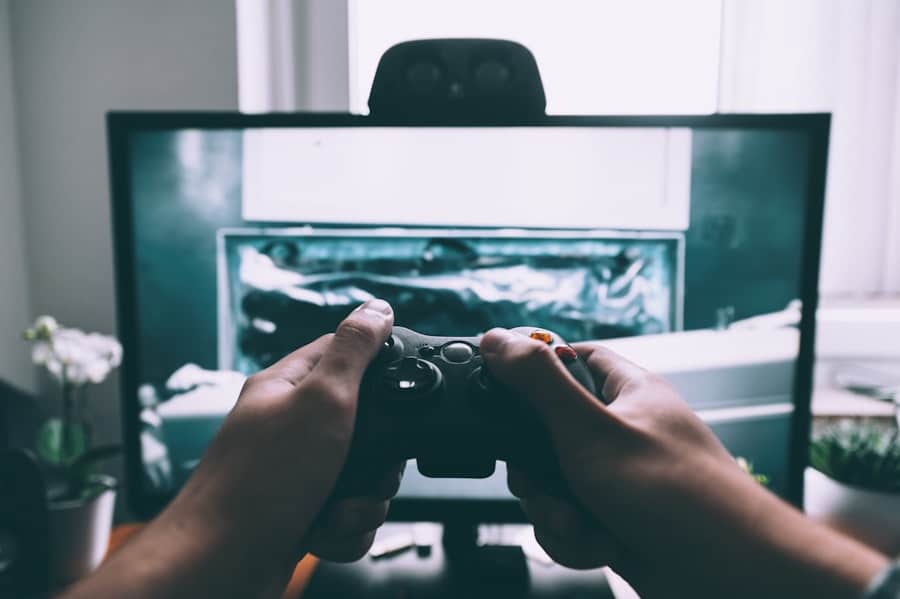
The intersection of reinforcement learning and game development presents a fertile ground for innovation. In traditional game design, NPC behavior is often scripted, leading to predictable patterns that can diminish player engagement. However, by integrating RL into game development, developers can create NPCs that learn from player actions and adapt their strategies accordingly.
This dynamic interaction can lead to more challenging gameplay experiences that keep players on their toes. Moreover, RL can be employed to optimize game mechanics beyond NPC behavior. For instance, it can be used to fine-tune difficulty levels in real-time based on player performance.
By analyzing player actions and outcomes, an RL system can adjust challenges to maintain an optimal level of engagement. This adaptability not only enhances player satisfaction but also extends the longevity of games by providing a tailored experience that evolves with the player’s skill level.
Case Studies: Successful Implementation of Reinforcement Learning in Games
Several notable case studies illustrate the successful implementation of reinforcement learning in game development. One prominent example is OpenAI’s work with the game Dota 2. The AI system, known as OpenAI Five, was trained using reinforcement learning techniques to compete against human players.
By playing millions of games against itself, OpenAI Five learned complex strategies and developed an understanding of team dynamics that allowed it to compete at a high level. This project showcased not only the potential of RL in creating intelligent agents but also highlighted how such systems could push the boundaries of competitive gaming. Another significant case study is DeepMind’s AlphaStar, which was designed to play StarCraft
AlphaStar utilized a combination of deep reinforcement learning and imitation learning to master the intricacies of this real-time strategy game. By training on vast amounts of gameplay data and competing against itself, AlphaStar achieved Grandmaster status, demonstrating an ability to execute complex strategies and adapt to various play styles. This achievement underscored the potential for RL to revolutionize not just NPC behavior but also competitive gaming at large.
| Metric | Description | Example in Game Development | Impact |
|---|---|---|---|
| Training Time | Duration required to train an RL agent to perform a task | Training an AI bot to play a level in a platformer game | Longer training times can delay development but improve agent performance |
| Reward Signal Design | Definition of rewards to guide agent behavior | Rewarding an agent for collecting items or defeating enemies | Well-designed rewards lead to more natural and effective AI behaviors |
| Agent Performance | Effectiveness of the RL agent in achieving game objectives | Win rate of an AI opponent in a strategy game | Higher performance improves player challenge and engagement |
| Sample Efficiency | Number of game interactions needed for learning | Number of game episodes before the agent masters a skill | Higher efficiency reduces computational resources and time |
| Generalization | Ability of the RL agent to perform well in unseen scenarios | Agent adapting to new levels or player strategies | Improves replayability and robustness of AI |
| Computational Cost | Resources required to train and run RL models | GPU hours needed for training AI in a complex 3D game | Higher costs may limit feasibility for smaller studios |
| Player Experience | Impact of RL-driven AI on player enjoyment and engagement | Dynamic difficulty adjustment based on player skill | Enhances immersion and satisfaction |
Challenges and Limitations of Using Reinforcement Learning in Game Development

Despite its promise, the integration of reinforcement learning into game development is not without challenges. One significant limitation is the computational cost associated with training RL models. Training an agent often requires vast amounts of data and extensive computational resources, which can be prohibitive for smaller studios or independent developers.
The need for powerful hardware and long training times can limit accessibility and slow down the development process. Additionally, designing reward structures for RL agents can be complex and nuanced. If rewards are not carefully calibrated, agents may learn suboptimal behaviors or exploit unintended loopholes within the game mechanics.
Striking the right balance in reward design is crucial for ensuring that RL agents contribute positively to gameplay rather than detracting from it.
The Future of Reinforcement Learning in Game Development
Looking ahead, the future of reinforcement learning in game development appears promising yet challenging. As computational resources continue to improve and algorithms become more sophisticated, we can expect RL to play an increasingly central role in creating dynamic gaming experiences. The potential for RL to enable personalized gameplay experiences tailored to individual player preferences could redefine how games are designed and played.
These systems could assist in level design, balancing gameplay mechanics, or even generating content dynamically based on player interactions. Such advancements could lead to a new era of gaming where AI not only enhances gameplay but also contributes creatively to the development process itself.
Best Practices for Integrating Reinforcement Learning in Game Development
To effectively integrate reinforcement learning into game development, several best practices should be considered. First and foremost is the importance of defining clear objectives for RL agents. Developers should establish specific goals that align with overall gameplay mechanics and player experience.
This clarity will guide the design of reward structures and help ensure that agents learn behaviors that enhance rather than detract from gameplay. Another best practice involves iterative testing and refinement throughout the development process. As with any aspect of game design, continuous feedback is essential for optimizing RL agents’ performance.
Developers should regularly assess how well agents are adapting to player behavior and make adjustments as necessary. This iterative approach not only improves agent performance but also helps maintain a balance between challenge and enjoyment for players. Additionally, collaboration between AI researchers and game developers can yield significant benefits.
By working together, these professionals can share insights on algorithmic advancements while ensuring that AI systems are designed with gameplay in mind. This collaboration can lead to innovative solutions that leverage the strengths of both fields, ultimately resulting in richer gaming experiences.
The Impact of Reinforcement Learning on the Gaming Industry
The impact of reinforcement learning on the gaming industry is profound and multifaceted. As developers continue to explore its potential, we are likely to see a transformation in how games are designed and experienced. The ability for NPCs to learn from player interactions creates opportunities for more engaging gameplay dynamics that adapt over time.
Moreover, as RL technology matures, it may pave the way for entirely new genres of games that leverage adaptive AI systems as core components of gameplay. The future holds exciting possibilities for both players and developers alike as they navigate this evolving landscape where artificial intelligence plays an increasingly prominent role in shaping interactive entertainment experiences.
In the realm of game development, the integration of advanced technologies like reinforcement learning is becoming increasingly significant. For those interested in exploring how innovative approaches can transform various industries, a related article titled “How One Founder Realized the Potential of Sustainable Energy” provides insights into the application of cutting-edge solutions in a different field. You can read it [here](https://enicomp.com/how-one-founder-realized-the-potential-of-sustainable-energy/).
FAQs
What is reinforcement learning?
Reinforcement learning (RL) is a type of machine learning where an agent learns to make decisions by performing actions in an environment to maximize cumulative rewards.
How is reinforcement learning used in game development?
In game development, reinforcement learning is used to create intelligent agents that can learn and adapt to player behavior, optimize game strategies, and enhance non-player character (NPC) interactions.
What are the benefits of using reinforcement learning in games?
Benefits include more dynamic and challenging gameplay, improved NPC behavior, personalized player experiences, and the ability to automate game testing and balancing.
Can reinforcement learning improve NPC behavior?
Yes, reinforcement learning enables NPCs to learn from interactions and adapt their strategies, making them more realistic and challenging opponents or allies.
Is reinforcement learning suitable for all types of games?
While RL is powerful, it is most effective in games with clear objectives and feedback mechanisms. It may be less suitable for games with highly unpredictable or narrative-driven elements.
What are some challenges of implementing reinforcement learning in games?
Challenges include high computational costs, the need for large amounts of training data, ensuring real-time performance, and balancing learning agents to maintain fair gameplay.
Are there any popular games that use reinforcement learning?
Yes, some games and research projects have used RL for AI opponents or procedural content generation, such as OpenAI’s Dota 2 bot and DeepMind’s AlphaStar for StarCraft II.
How does reinforcement learning differ from other AI techniques in game development?
Unlike rule-based or supervised learning approaches, reinforcement learning focuses on learning optimal actions through trial and error, without requiring labeled datasets.
Can reinforcement learning be used for procedural content generation?
Yes, RL can be applied to generate game levels, items, or scenarios by learning to create content that meets specific design goals or player preferences.
What tools or frameworks support reinforcement learning in game development?
Popular tools include TensorFlow, PyTorch, Unity ML-Agents, and OpenAI Gym, which provide environments and libraries to develop and train RL agents for games.