


Wearable technology has grown significantly over the past decade, evolving from specialized devices to mainstream consumer products. Early wearables focused primarily on fitness tracking, with devices like Fitbit enabling users to monitor physical activity and basic health metrics. Technological developments led to the creation of advanced smartwatches, including the Apple Watch and Samsung Galaxy Watch, which expanded functionality beyond fitness tracking to include notifications, GPS navigation, and mobile payment systems.
This progression demonstrates the market’s shift toward multifunctional devices that integrate connectivity and utility into daily routines. Several technological and market factors have driven the expansion of wearable devices. Improvements in sensor technology, component miniaturization, and increased consumer interest in health monitoring have contributed to this growth.
Contemporary wearables commonly feature heart rate sensors, sleep monitoring capabilities, and electrocardiogram (ECG) functions. The incorporation of artificial intelligence and machine learning technologies has enhanced device capabilities, providing users with personalized health data analysis and recommendations. These developments have transformed wearables from basic activity monitors into comprehensive health management platforms that enable users to actively monitor and manage their health data.
Key Takeaways
- Wearable technology and smart home systems are rapidly evolving and increasingly interconnected.
- Integrating wearables with smart homes enhances convenience, health monitoring, and personalized automation.
- Key challenges include compatibility issues, data security, and user privacy concerns.
- Successful integration examples include fitness trackers controlling home environments and smartwatches managing security systems.
- Future trends focus on advanced AI, improved interoperability, and stronger security measures for seamless user experiences.
The Evolution of Smart Home Systems
Smart home systems have undergone significant evolution since their inception, transitioning from basic automation to complex ecosystems that integrate various devices and services. Early smart home technologies focused on simple tasks such as remote lighting control or thermostat adjustments. However, with the advent of the Internet of Things (IoT), smart home systems have expanded to encompass a wide range of devices, including smart speakers, security cameras, smart locks, and appliances.
This interconnectedness allows homeowners to manage their environments more efficiently and intuitively. The development of voice-activated assistants like Amazon’s Alexa and Google Assistant has played a pivotal role in the evolution of smart home systems. These platforms enable users to control multiple devices through simple voice commands, creating a seamless user experience.
Furthermore, advancements in machine learning have allowed smart home systems to learn user preferences over time, optimizing energy usage and enhancing security measures. As a result, smart homes are not only more convenient but also more energy-efficient and secure than ever before.
Benefits of Integrating Wearables with Smart Home Systems
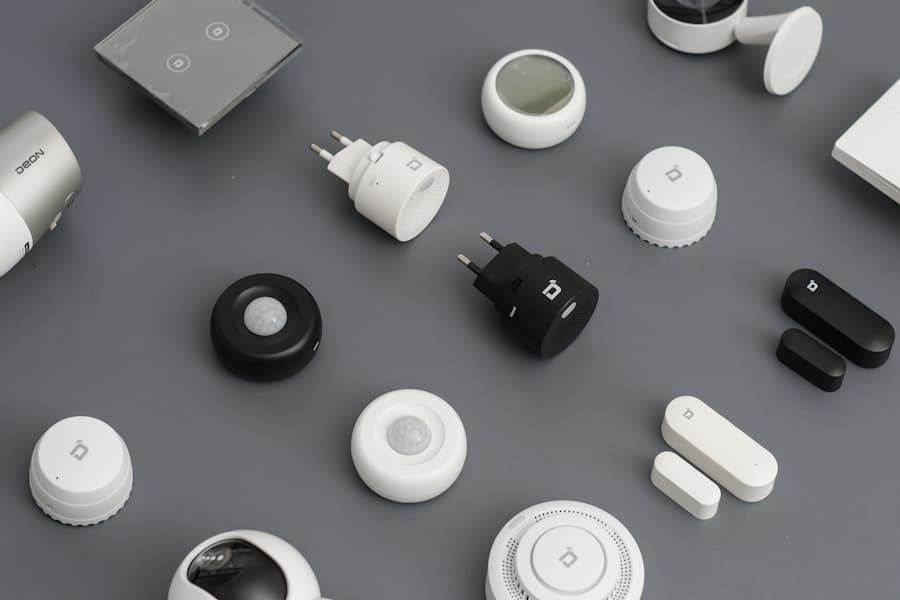
The integration of wearable technology with smart home systems presents numerous benefits that enhance both convenience and functionality. One of the most significant advantages is the ability to create a personalized living environment that adapts to individual preferences. For example, a wearable device can monitor a user’s heart rate and stress levels throughout the day.
Based on this data, the smart home system can adjust lighting, temperature, or even play calming music when it detects elevated stress levels, creating a more relaxing atmosphere. Moreover, this integration can significantly improve home security. Wearables equipped with location tracking can communicate with smart home security systems to provide real-time alerts when users are approaching or leaving their homes.
For instance, if a user wearing a smartwatch approaches their front door, the smart lock can automatically unlock, eliminating the need for fumbling with keys. This not only enhances convenience but also adds an extra layer of security by ensuring that only authorized individuals can access the home.
Challenges and Considerations in Integration
Despite the numerous benefits of integrating wearables with smart home systems, several challenges and considerations must be addressed to ensure successful implementation. One primary concern is interoperability among different devices and platforms. With a plethora of manufacturers producing wearables and smart home devices, ensuring that these products can communicate effectively is crucial.
Incompatibility issues can lead to frustration for users who expect seamless integration but encounter barriers due to differing protocols or standards. Another significant challenge is data privacy and security. As wearables collect sensitive health information and smart home systems monitor personal activities, safeguarding this data becomes paramount.
Users must be aware of how their data is being used and stored by both wearable manufacturers and smart home system providers. Implementing robust encryption methods and transparent data policies is essential to build trust among consumers and encourage widespread adoption of integrated systems.
Examples of Wearables and Smart Home Systems Integration
| Metric | Description | Value | Unit |
|---|---|---|---|
| Wearable Device Compatibility | Percentage of wearables compatible with smart home systems | 85 | % |
| Average Response Time | Time taken for smart home system to respond to wearable commands | 1.2 | seconds |
| Energy Consumption | Average additional energy used by smart home devices when integrated with wearables | 15 | Watts |
| User Satisfaction Rate | Percentage of users satisfied with wearable-smart home integration | 78 | % |
| Security Incidents | Number of reported security breaches related to wearable-smart home integration | 3 | incidents/year |
| Integration Cost | Average cost to integrate wearables with smart home systems | 120 | units |
| Data Sync Frequency | How often data is synchronized between wearables and smart home systems | Every 5 | minutes |
Several innovative examples illustrate the successful integration of wearables with smart home systems, showcasing the potential for enhanced user experiences. One notable instance is the collaboration between Fitbit and Nest, where Fitbit users can control their Nest thermostats based on their activity levels. For example, if a user completes a workout session tracked by their Fitbit device, the Nest thermostat can automatically adjust to a cooler temperature to aid in recovery.
Another compelling example is the integration of Apple Watch with HomeKit-enabled devices. Users can control lights, locks, and other smart home features directly from their wrist using Siri voice commands or through the Home app. This level of convenience allows users to manage their homes effortlessly while on the go or even while relaxing at home.
Additionally, some smart home security systems can send alerts directly to wearables when unusual activity is detected, ensuring that users remain informed about their home’s safety at all times.
Future Trends and Innovations

As technology continues to advance, the future of wearable technology and smart home systems integration promises exciting innovations that will further enhance user experiences. One emerging trend is the development of more sophisticated health monitoring capabilities within wearables. Future devices may incorporate advanced sensors capable of tracking a wider range of health metrics, such as blood glucose levels or hydration status.
This data could then be used to inform smart home systems about optimal living conditions for health and wellness. Additionally, artificial intelligence will play an increasingly vital role in this integration. Smart home systems may become more proactive in anticipating user needs based on historical data collected from wearables.
For instance, if a user consistently wakes up at a certain time and experiences high stress levels in the morning, the smart home system could preemptively adjust lighting and temperature settings to create a more pleasant waking environment. Such innovations will not only enhance convenience but also promote healthier lifestyles by leveraging data-driven insights.
Security and Privacy Concerns
The integration of wearables with smart home systems raises significant security and privacy concerns that must be addressed to protect users’ sensitive information. As wearables collect vast amounts of personal data—ranging from health metrics to location information—ensuring that this data is securely transmitted and stored is critical. Cybersecurity threats such as hacking or unauthorized access could lead to severe consequences for users if their personal information falls into the wrong hands.
Moreover, users must be educated about the potential risks associated with sharing data between wearables and smart home systems. Transparency regarding data usage policies is essential for building trust among consumers. Companies must implement stringent security measures such as end-to-end encryption and regular software updates to safeguard user data against potential breaches.
Additionally, providing users with clear options for managing their privacy settings will empower them to make informed decisions about what information they choose to share.
Tips for Seamless Integration of Wearables with Smart Home Systems
To achieve seamless integration between wearables and smart home systems, users should consider several best practices that enhance functionality and user experience.
Before purchasing wearables or smart home products, users should research compatibility with existing devices or platforms they intend to use.
Many manufacturers provide lists of compatible products or ecosystems that facilitate integration. Another important tip is to regularly update both wearable devices and smart home systems to ensure optimal performance and security. Software updates often include new features as well as critical security patches that protect against vulnerabilities.
Users should also take advantage of automation features available within smart home systems to create routines that respond to data collected from wearables. For example, setting up an automation that dims lights when a user’s smartwatch detects they are winding down for bed can enhance comfort while promoting healthy sleep habits. In conclusion, as wearable technology continues to evolve alongside smart home systems, the potential for integration will only grow stronger.
By understanding the benefits, challenges, and best practices associated with this integration, users can create a more connected and efficient living environment that enhances their overall quality of life.
In the realm of smart technology, the integration of wearables with smart home systems is becoming increasingly significant. For those interested in how these devices can enhance daily life, a related article on choosing the right smartphone for gaming can provide insights into the importance of connectivity and performance in smart devices. You can read more about it in this article: How to Choose Smartphone for Games.
FAQs
What are wearables in the context of smart home systems?
Wearables are electronic devices worn on the body, such as smartwatches, fitness trackers, and smart glasses, that can connect to and interact with smart home systems to provide enhanced control and automation.
How do wearables integrate with smart home systems?
Wearables integrate with smart home systems through wireless technologies like Bluetooth, Wi-Fi, or Zigbee, allowing users to control devices, receive notifications, and automate home functions directly from their wearable devices.
What are the benefits of integrating wearables with smart home systems?
Benefits include increased convenience, hands-free control, personalized automation based on user activity or health data, improved security through biometric authentication, and real-time monitoring of home environments.
Are there any security concerns with using wearables in smart homes?
Yes, security concerns include potential unauthorized access, data privacy issues, and vulnerabilities in wireless communication. It is important to use secure connections, update device firmware regularly, and follow best practices for data protection.
Can wearables control all smart home devices?
While many wearables can control a wide range of smart home devices, compatibility depends on the specific wearable, the smart home system, and supported communication protocols. Not all devices may be fully controllable via wearables.
What types of smart home functions can be managed through wearables?
Wearables can manage functions such as lighting control, thermostat adjustments, security system monitoring, door locks, appliance control, and receiving alerts or notifications from smart home devices.
Do wearables require a central hub to connect with smart home systems?
Some smart home systems require a central hub to coordinate device communication, while others operate on direct connections. Wearables may connect directly to devices or through a hub depending on the system architecture.
Is it necessary to have internet access for wearables to work with smart home systems?
Internet access is often required for remote control and cloud-based features, but some local control functions can operate without internet if the wearable and smart home devices are connected on the same local network.
How does the integration of wearables enhance home automation?
Integration allows automation to be triggered by wearable data such as location, activity, or health metrics, enabling personalized and context-aware smart home responses without manual input.
Are there any popular platforms or brands that support wearable and smart home integration?
Yes, platforms like Apple HomeKit, Google Home, and Amazon Alexa support integration with various wearables such as Apple Watch, Fitbit, and Samsung Galaxy Watch, enabling seamless control and automation.