

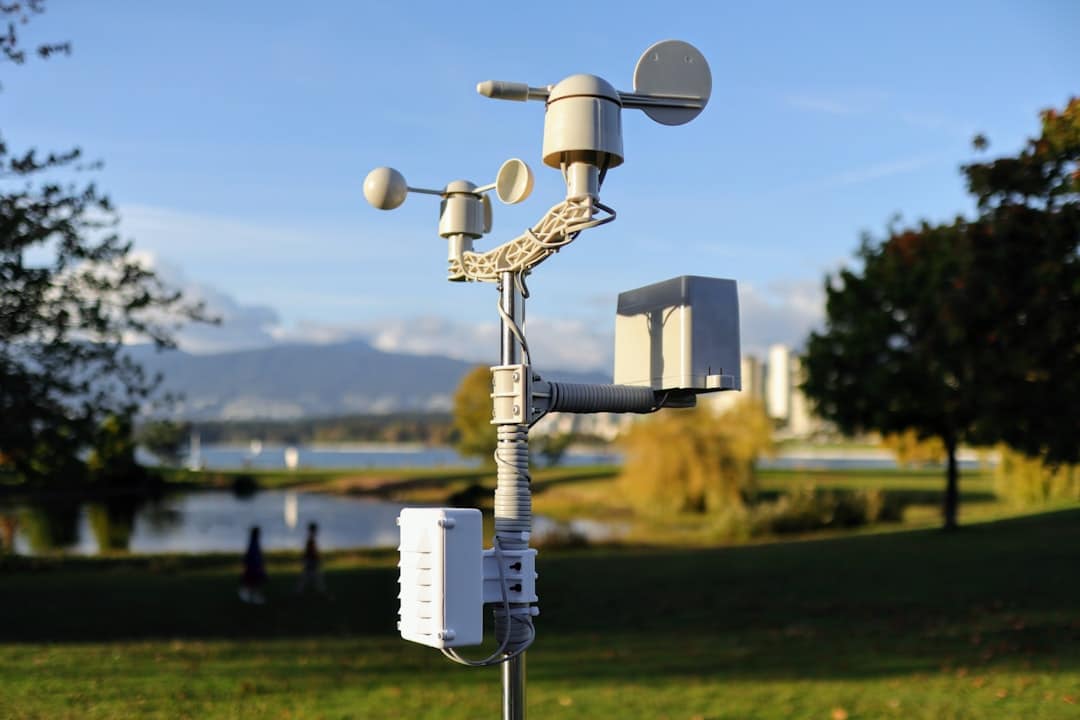
Quantum sensors represent a groundbreaking advancement in measurement technology, leveraging the principles of quantum mechanics to achieve unprecedented sensitivity and precision. Unlike classical sensors, which rely on macroscopic phenomena, quantum sensors exploit the unique behaviors of quantum systems, such as superposition and entanglement. This allows them to detect minute changes in physical quantities, such as magnetic fields, temperature, and gravitational forces, with remarkable accuracy.
The development of quantum sensors is not merely an incremental improvement over existing technologies; it signifies a paradigm shift that could revolutionize various fields, from fundamental physics to practical applications in medicine and industry. The burgeoning field of quantum sensing has garnered significant attention in recent years, driven by advancements in quantum technology and a deeper understanding of quantum mechanics. Researchers are exploring a variety of quantum systems, including atoms, photons, and superconducting circuits, to create sensors that can operate under a range of conditions.
The potential applications are vast, encompassing everything from detecting gravitational waves to monitoring environmental changes. As we delve deeper into the theoretical foundations and practical implementations of quantum sensors, it becomes clear that they hold the promise of transforming our ability to measure and understand the world around us.
Key Takeaways
- Quantum sensors leverage quantum mechanics to achieve unprecedented sensitivity and precision.
- They are transforming scientific research by enabling measurements at atomic and subatomic scales.
- Medical applications include improved imaging and diagnostics through enhanced sensor accuracy.
- Environmental monitoring benefits from quantum sensors’ ability to detect minute changes in pollutants and climate variables.
- Despite challenges like technical complexity and cost, quantum sensors hold significant future potential across various industries.
Theoretical Basis of Quantum Sensors
At the heart of quantum sensors lies the intricate framework of quantum mechanics, which describes the behavior of matter and energy at the smallest scales. One of the key principles utilized in quantum sensing is superposition, where a quantum system can exist in multiple states simultaneously until measured. This property allows quantum sensors to sample multiple possibilities at once, enhancing their sensitivity.
For instance, in atomic interferometry, atoms are placed in a superposition of different momentum states, enabling the sensor to detect minute changes in gravitational fields or accelerations with exceptional precision. Entanglement is another fundamental aspect that underpins many quantum sensors. When two or more particles become entangled, the state of one particle is intrinsically linked to the state of another, regardless of the distance separating them.
For example, entangled photons can be used in optical sensors to achieve better resolution than classical light sources. The theoretical framework supporting these phenomena is complex and requires a deep understanding of quantum mechanics, but it is this very complexity that enables quantum sensors to outperform their classical counterparts in specific applications.
Quantum Sensors in Scientific Research

Quantum sensors have emerged as invaluable tools in scientific research, particularly in fields such as fundamental physics and cosmology. One notable application is in the detection of gravitational waves, ripples in spacetime caused by massive astronomical events like black hole mergers. The Laser Interferometer Gravitational-Wave Observatory (LIGO) employs highly sensitive laser interferometry techniques that can measure changes in distance on the order of one-thousandth the diameter of a proton.
By utilizing quantum-enhanced techniques, researchers aim to improve the sensitivity of these measurements further, allowing for the detection of fainter gravitational waves and providing insights into the universe’s most violent phenomena. In addition to astrophysics, quantum sensors are making significant contributions to materials science. Quantum-enhanced magnetometers can detect magnetic fields with extraordinary sensitivity, enabling researchers to study materials at the atomic level.
For instance, these sensors can be used to investigate the magnetic properties of novel superconductors or to explore the behavior of spintronic materials, which have potential applications in next-generation computing technologies. The ability to probe materials with such precision opens new avenues for discovery and innovation across various scientific disciplines.
Quantum Sensors in Medical Applications
The medical field stands to benefit immensely from the advancements in quantum sensor technology. One promising application is in magnetic resonance imaging (MRI), where quantum sensors can enhance image resolution and contrast. Traditional MRI relies on classical radiofrequency signals to generate images of soft tissues; however, integrating quantum sensors could lead to faster imaging times and improved diagnostic capabilities.
For example, using superconducting qubit-based sensors could allow for real-time monitoring of metabolic processes within tissues, providing clinicians with critical information during surgical procedures. Another area where quantum sensors are making strides is in biomolecular sensing. Quantum-enhanced biosensors can detect low concentrations of biomolecules associated with diseases such as cancer or infectious diseases.
By utilizing techniques like surface plasmon resonance combined with quantum dots, researchers can achieve high sensitivity and specificity in detecting biomarkers. This capability could lead to earlier diagnosis and more effective treatment strategies, ultimately improving patient outcomes.
Quantum Sensors in Environmental Monitoring
| Metric | Traditional Sensors | Quantum Sensors | Improvement Factor | Impact on Measurement Precision |
|---|---|---|---|---|
| Sensitivity | 10^-6 units | 10^-9 units | 1000x | Allows detection of extremely weak signals |
| Resolution | 1 micrometer | 1 nanometer | 1000x | Enables ultra-fine spatial measurements |
| Noise Floor | 10^-5 units | 10^-8 units | 1000x | Reduces measurement uncertainty significantly |
| Measurement Speed | Milliseconds | Microseconds | 1000x | Faster data acquisition and real-time monitoring |
| Energy Consumption | High | Low | — | More efficient sensing with less power |
Environmental monitoring is another domain where quantum sensors are proving transformative. The ability to detect minute changes in environmental parameters is crucial for understanding climate change and its impacts on ecosystems. Quantum sensors can measure variations in temperature, humidity, and atmospheric pressure with unparalleled accuracy.
For instance, satellite-based quantum sensors equipped with atomic clocks can monitor changes in Earth’s gravitational field caused by melting ice caps or shifting tectonic plates, providing valuable data for climate scientists. Moreover, quantum sensors can play a pivotal role in monitoring air quality and detecting pollutants at extremely low concentrations. By employing techniques such as laser-induced fluorescence combined with quantum-enhanced detection methods, researchers can identify harmful substances like volatile organic compounds (VOCs) or particulate matter with high sensitivity.
This capability not only aids regulatory compliance but also helps protect public health by providing timely information about air quality fluctuations.
Quantum Sensors in Industrial Processes
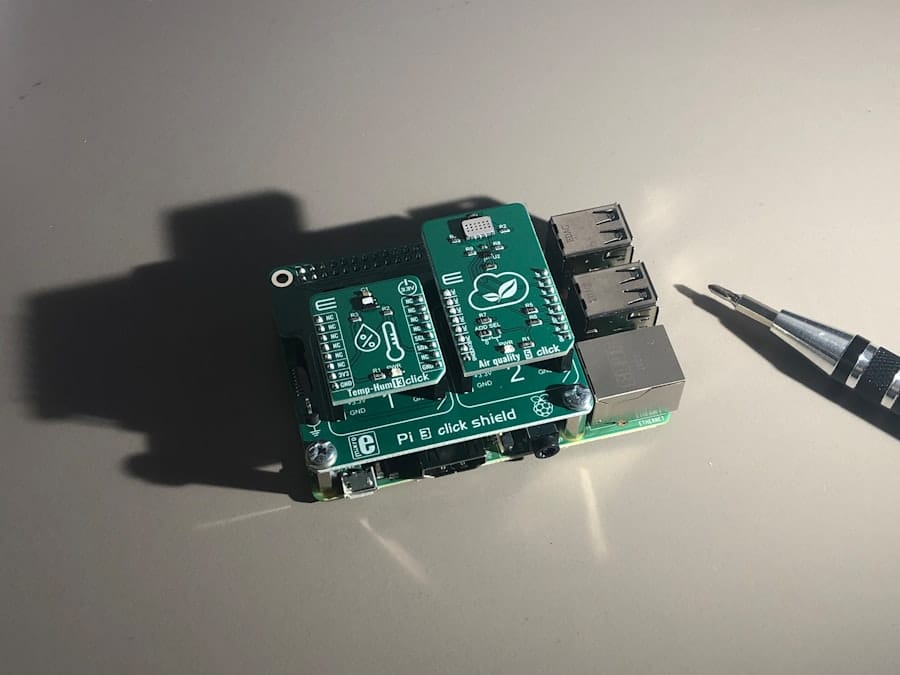
In industrial settings, quantum sensors are poised to enhance efficiency and safety across various processes.
Quantum-enhanced metrology techniques can measure dimensions and surface profiles with nanometer-level accuracy, ensuring that components meet stringent specifications.
This level of precision reduces waste and rework costs while improving overall production efficiency. Additionally, quantum sensors can be employed for real-time monitoring of industrial processes such as chemical reactions or material transformations. By integrating these sensors into production lines, manufacturers can gain insights into process dynamics that were previously difficult to capture.
For example, using quantum-enhanced spectroscopy techniques allows for continuous monitoring of chemical concentrations during reactions, enabling operators to make adjustments on-the-fly and optimize yields.
Challenges and Limitations of Quantum Sensors
Despite their immense potential, quantum sensors face several challenges that must be addressed before they can be widely adopted across various industries. One significant hurdle is the complexity of maintaining quantum coherence—the delicate state required for optimal sensor performance. Environmental factors such as temperature fluctuations and electromagnetic interference can disrupt coherence, leading to reduced sensitivity and accuracy.
Researchers are actively exploring methods to mitigate these effects through advanced shielding techniques and cryogenic environments. Another limitation lies in the scalability of quantum sensor technology. While prototypes have demonstrated remarkable capabilities in laboratory settings, translating these advancements into practical devices suitable for everyday use remains a challenge.
The integration of quantum sensors into existing infrastructure requires significant investment and expertise, which may hinder widespread adoption. Additionally, there are concerns regarding the standardization and calibration of these new technologies to ensure consistent performance across different applications.
Future Potential of Quantum Sensors
The future potential of quantum sensors is vast and largely untapped. As research continues to advance our understanding of quantum mechanics and its applications, we can expect significant breakthroughs that will further enhance sensor capabilities. One exciting avenue is the development of portable quantum sensors that could be deployed in various settings—from remote environmental monitoring stations to mobile medical diagnostics—making high-precision measurements accessible outside traditional laboratory environments.
Moreover, as industries increasingly recognize the value of data-driven decision-making, the integration of quantum sensors into the Internet of Things (IoT) ecosystem could lead to transformative changes across sectors such as agriculture, transportation, and energy management. By providing real-time data with unparalleled accuracy, these sensors could enable smarter resource management and more sustainable practices. In conclusion, while challenges remain in realizing the full potential of quantum sensors, ongoing research and technological advancements promise a future where these devices play an integral role in shaping our understanding of the world and improving our quality of life across multiple domains.
In the realm of advanced measurement techniques, the article “Exploring the Impact of Quantum Sensors on Measurement Precision” highlights the transformative potential of quantum technology. For those interested in the intersection of technology and design, you might find it useful to read about how to select the right equipment for creative tasks in the article on choosing a laptop for graphic design. This resource provides insights that can enhance your understanding of the tools that support precision in various fields, including those influenced by quantum advancements.
FAQs
What are quantum sensors?
Quantum sensors are devices that utilize quantum phenomena, such as superposition and entanglement, to measure physical quantities with extremely high precision and sensitivity.
How do quantum sensors improve measurement precision?
Quantum sensors leverage quantum effects to reduce noise and enhance signal detection, allowing for measurements that surpass the limits of classical sensors in terms of accuracy and resolution.
What types of measurements benefit from quantum sensors?
Quantum sensors can improve measurements in various fields, including magnetic and electric fields, time and frequency standards, gravitational forces, temperature, and pressure.
What are some common applications of quantum sensors?
Applications include medical imaging, navigation systems, geological surveying, fundamental physics experiments, and environmental monitoring.
How do quantum sensors differ from classical sensors?
Unlike classical sensors, quantum sensors exploit quantum mechanical properties, enabling them to detect smaller changes and achieve higher precision than classical counterparts.
Are quantum sensors commercially available?
Yes, some quantum sensor technologies have been commercialized, particularly in areas like atomic clocks and magnetometers, with ongoing research expanding their availability.
What challenges exist in developing quantum sensors?
Challenges include maintaining quantum coherence, minimizing environmental noise, scaling the technology for practical use, and integrating quantum sensors into existing systems.
Can quantum sensors operate at room temperature?
Some quantum sensors can operate at or near room temperature, but many require controlled environments such as ultra-low temperatures or vacuum conditions to maintain quantum states.
How does quantum entanglement enhance sensor performance?
Quantum entanglement allows correlated particles to share information instantaneously, which can improve measurement sensitivity and reduce uncertainty beyond classical limits.
What is the future outlook for quantum sensor technology?
Quantum sensor technology is expected to advance rapidly, leading to more precise measurements, new scientific discoveries, and enhanced capabilities across various industries.