

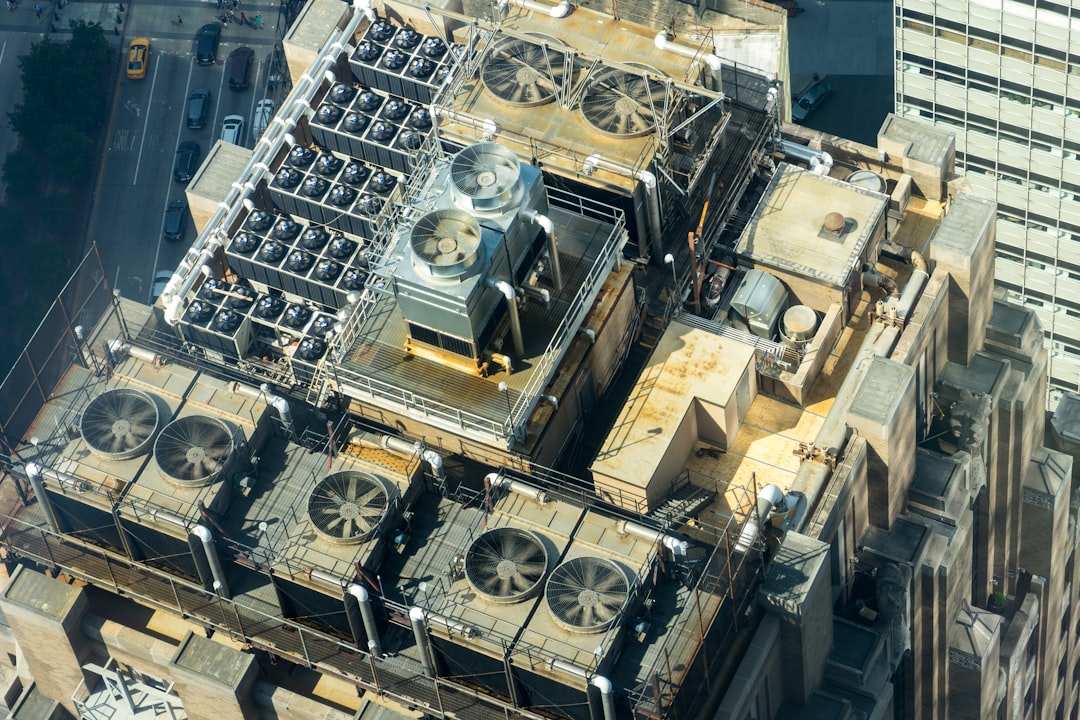
As the digital landscape continues to expand, the demand for data centers has surged, leading to an increased focus on sustainable cooling technologies. Data centers are notorious for their high energy consumption, with cooling systems accounting for a significant portion of this usage. Traditional cooling methods, such as air conditioning, not only consume vast amounts of electricity but also contribute to greenhouse gas emissions.
As organizations strive to meet sustainability goals and reduce their carbon footprints, the importance of adopting sustainable cooling technologies becomes paramount. These technologies not only help mitigate environmental impacts but also enhance operational efficiency and reduce costs in the long run. Sustainable cooling technologies encompass a range of innovative solutions designed to minimize energy consumption while maintaining optimal operating conditions for servers and other critical equipment.
By implementing these technologies, data centers can significantly lower their reliance on fossil fuels and decrease their overall environmental impact. Moreover, as regulatory pressures increase and consumers become more environmentally conscious, companies that prioritize sustainable practices are likely to gain a competitive edge. The transition to sustainable cooling solutions is not merely a trend; it is an essential step toward creating a more resilient and responsible digital infrastructure.
Key Takeaways
- Sustainable cooling technologies are crucial for reducing the environmental footprint of data centers.
- Energy-efficient cooling systems and liquid cooling methods significantly lower power consumption.
- Integrating renewable energy sources enhances the sustainability of data center cooling operations.
- Artificial intelligence optimizes cooling efficiency by dynamically managing temperature and airflow.
- Innovations like thermal energy storage and advanced airflow management help minimize environmental impact.
Advancements in Energy-Efficient Cooling Systems
The evolution of energy-efficient cooling systems has been marked by significant technological advancements that aim to optimize performance while minimizing energy consumption. One notable development is the use of variable refrigerant flow (VRF) systems, which allow for precise control over the cooling output based on real-time demand. Unlike traditional systems that operate at a constant capacity, VRF systems adjust their cooling output dynamically, resulting in substantial energy savings.
This adaptability is particularly beneficial in data centers where load fluctuations can occur frequently due to varying workloads. Another promising advancement is the integration of economizers, which leverage external environmental conditions to reduce reliance on mechanical cooling. For instance, air-side economizers utilize outside air to cool the data center when conditions permit, significantly lowering energy consumption during cooler months.
Water-side economizers can similarly harness cooler water sources to enhance cooling efficiency. These systems not only reduce energy costs but also extend the lifespan of mechanical equipment by minimizing wear and tear associated with constant operation.
Implementing Renewable Energy Sources for Data Center Cooling

The integration of renewable energy sources into data center operations represents a transformative approach to achieving sustainable cooling solutions. Solar power, wind energy, and other renewable resources can be harnessed to power cooling systems, thereby reducing dependence on non-renewable energy sources. For example, solar panels installed on the rooftops of data centers can generate electricity that directly powers cooling units, effectively lowering operational costs and carbon emissions.
This approach not only aligns with global sustainability goals but also enhances energy resilience by diversifying energy sources. Moreover, some data centers are exploring innovative partnerships with renewable energy providers to secure green energy contracts.
This strategy not only supports the growth of renewable energy markets but also enhances the reputation of organizations as environmentally responsible entities. As the technology for harnessing renewable energy continues to advance, data centers have a unique opportunity to lead the charge toward a more sustainable future.
The Role of Artificial Intelligence in Optimizing Cooling Efficiency
Artificial intelligence (AI) is revolutionizing various industries, and data center cooling is no exception. AI-driven systems can analyze vast amounts of data in real-time to optimize cooling operations based on current conditions and predicted workloads. By employing machine learning algorithms, these systems can identify patterns and trends that inform more efficient cooling strategies.
For instance, AI can predict when certain servers will experience higher loads and adjust cooling outputs accordingly, ensuring that resources are allocated efficiently. Additionally, AI can facilitate predictive maintenance by monitoring the performance of cooling equipment and identifying potential issues before they escalate into costly failures. This proactive approach not only enhances system reliability but also reduces downtime and maintenance costs.
By leveraging AI technologies, data centers can achieve unprecedented levels of efficiency in their cooling operations, ultimately leading to reduced energy consumption and lower operational costs.
Utilizing Liquid Cooling Systems for Improved Energy Efficiency
| Innovation | Technology Type | Energy Efficiency Improvement | Water Usage Reduction | Implementation Status | Key Benefit |
|---|---|---|---|---|---|
| Liquid Immersion Cooling | Direct Cooling | Up to 40% | 90% reduction compared to traditional cooling | Commercially Available | Significant reduction in energy and water use |
| Free Air Cooling | Air Cooling | 20-50% depending on climate | Minimal water usage | Widely Adopted | Utilizes ambient air to reduce energy consumption |
| Thermoelectric Cooling | Solid-State Cooling | 15-25% | Zero water usage | Emerging Technology | Compact and environmentally friendly |
| Phase Change Materials (PCM) | Thermal Storage | 10-30% | Depends on system design | Pilot Projects | Reduces peak cooling loads and energy spikes |
| AI-Driven Cooling Optimization | Software & Controls | Up to 30% | Indirect reduction via efficiency | Increasing Adoption | Optimizes cooling system performance in real-time |
Liquid cooling systems have emerged as a highly effective alternative to traditional air-based cooling methods in data centers. These systems utilize liquids—such as water or specialized coolants—to absorb heat directly from server components, allowing for more efficient heat transfer compared to air cooling. One of the primary advantages of liquid cooling is its ability to maintain lower temperatures with less energy consumption.
This is particularly beneficial in high-density environments where traditional air cooling may struggle to keep up with heat generation.
Direct-to-chip cooling involves circulating coolant directly to the heat-generating components of servers, while immersion cooling submerges entire server racks in a non-conductive liquid.
Both methods have demonstrated significant reductions in energy usage compared to conventional air-cooled systems. Furthermore, liquid cooling can enable higher server performance by allowing for more aggressive overclocking without the risk of overheating, thus maximizing the return on investment for data center operators.
Exploring the Potential of Thermal Energy Storage for Data Center Cooling
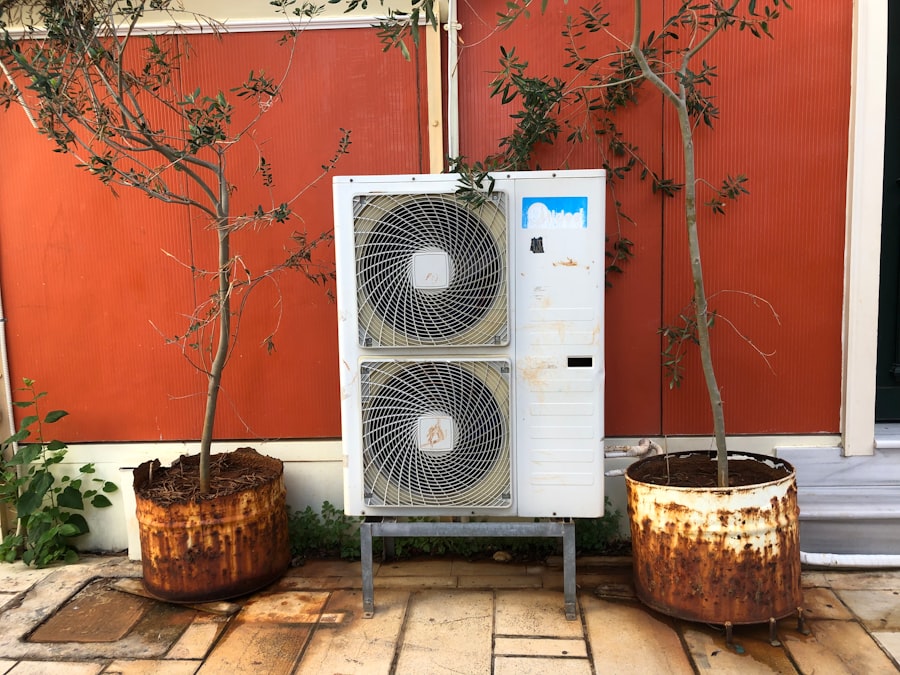
Thermal energy storage (TES) presents an innovative solution for enhancing the efficiency of data center cooling systems by decoupling cooling production from consumption. This technology allows data centers to produce and store chilled water or ice during off-peak hours when electricity rates are lower or when renewable energy sources are abundant. During peak demand periods, this stored thermal energy can be utilized to cool the facility without relying on additional electricity consumption.
The implementation of TES systems can lead to substantial cost savings by reducing peak demand charges and optimizing energy usage throughout the day. For instance, a data center equipped with a chilled water TES system can produce chilled water at night when electricity is cheaper and store it for use during the day when demand—and prices—are higher. This strategy not only enhances operational efficiency but also contributes to grid stability by reducing strain during peak hours.
Innovations in Airflow Management for Data Center Cooling
Effective airflow management is critical for maintaining optimal temperatures within data centers and ensuring that cooling systems operate efficiently. Recent innovations in airflow management techniques have focused on optimizing the distribution of cool air while minimizing hot spots that can lead to equipment failures. One such innovation is the use of containment strategies—either hot aisle or cold aisle containment—to create distinct zones for hot and cold air circulation.
In hot aisle containment, hot air exhaust from servers is contained within a designated aisle, preventing it from mixing with cool air from the adjacent cold aisle. This separation allows for more efficient cooling as the cooling units can focus on delivering chilled air directly to the servers without interference from recirculated warm air. Similarly, cold aisle containment works by enclosing cold aisles to maintain low temperatures around server racks.
These containment strategies have been shown to improve overall cooling efficiency significantly while reducing energy consumption. Another innovative approach involves the use of advanced airflow monitoring systems that provide real-time insights into airflow patterns within the data center. By employing sensors and analytics tools, operators can identify inefficiencies in airflow distribution and make necessary adjustments to optimize performance.
This proactive management of airflow not only enhances cooling efficiency but also contributes to improved equipment reliability and longevity.
Addressing the Environmental Impact of Data Center Cooling Systems
The environmental impact of data center cooling systems cannot be overlooked, particularly as global awareness of climate change intensifies. Traditional cooling methods often rely on high-energy consumption and refrigerants that may contribute to ozone depletion or greenhouse gas emissions. As such, addressing these environmental concerns is crucial for creating a sustainable future for data centers.
One approach involves transitioning to low-impact refrigerants that have minimal global warming potential (GWP). The adoption of natural refrigerants—such as ammonia or carbon dioxide—can significantly reduce the environmental footprint of cooling systems while maintaining efficiency standards. Additionally, implementing stringent regulations around refrigerant management can help prevent leaks and ensure responsible usage throughout the lifecycle of cooling equipment.
Furthermore, data centers are increasingly being held accountable for their water usage in cooling processes, particularly in regions facing water scarcity. Innovative solutions such as closed-loop water systems or utilizing reclaimed water for cooling purposes can mitigate this impact while promoting responsible resource management. By prioritizing environmentally friendly practices in their cooling operations, data centers can play a pivotal role in addressing broader environmental challenges while ensuring their own long-term viability in an increasingly eco-conscious market.
In the quest for more efficient and environmentally friendly solutions, the article on how to choose a PC for students provides insights into selecting energy-efficient technology that can contribute to sustainable practices in various settings, including data centers. By understanding the importance of energy consumption in computing devices, stakeholders can make informed decisions that align with innovations in sustainable cooling technology.
FAQs
What are sustainable cooling technologies for data centers?
Sustainable cooling technologies for data centers refer to methods and systems designed to reduce energy consumption and environmental impact while maintaining optimal operating temperatures for servers and equipment. These technologies often utilize renewable energy sources, advanced heat exchange systems, and innovative cooling techniques.
Why is sustainable cooling important for data centers?
Sustainable cooling is important because data centers consume significant amounts of energy, much of which is used for cooling. Efficient cooling reduces operational costs, lowers carbon emissions, and helps data centers meet environmental regulations and sustainability goals.
What are some common innovations in sustainable cooling for data centers?
Innovations include liquid cooling systems, free cooling using outside air or water, immersion cooling, use of renewable energy sources, AI-driven temperature management, and heat recovery systems that reuse waste heat for other purposes.
How does liquid cooling improve sustainability in data centers?
Liquid cooling uses fluids to absorb and transfer heat more efficiently than traditional air cooling. This reduces energy consumption for cooling, allows for higher server densities, and can be integrated with heat reuse systems, enhancing overall sustainability.
Can data centers use natural resources for cooling?
Yes, many data centers use natural cooling methods such as free cooling, which leverages ambient air or water from nearby sources like lakes or rivers to cool equipment, significantly reducing reliance on mechanical refrigeration.
What role does AI play in sustainable cooling technologies?
AI can optimize cooling by analyzing real-time data to adjust cooling systems dynamically, improving efficiency, reducing energy waste, and maintaining ideal operating conditions for data center equipment.
Are there environmental benefits to using sustainable cooling technologies?
Yes, sustainable cooling reduces greenhouse gas emissions, lowers energy consumption, minimizes water usage in some cases, and decreases the overall environmental footprint of data center operations.
Is immersion cooling safe for data center equipment?
Immersion cooling involves submerging servers in dielectric fluids that do not conduct electricity. This method is safe for equipment, improves heat transfer efficiency, and reduces the need for traditional air conditioning.
How do sustainable cooling technologies impact data center costs?
While initial investments may be higher, sustainable cooling technologies often lead to significant long-term savings through reduced energy bills, lower maintenance costs, and potential incentives for green energy use.
Are sustainable cooling technologies widely adopted in the data center industry?
Adoption is growing as data centers seek to improve energy efficiency and meet sustainability targets. However, the extent of adoption varies depending on factors like location, scale, and available resources.