

Wearable technology has become increasingly integrated into military and first responder operations, fundamentally changing how personnel interact with their environments and execute critical tasks. These devices include smart helmets, body cameras, physiological monitors, and augmented reality systems that provide real-time data access, enhanced communication capabilities, and improved decision-making support. The growing complexity of modern warfare and emergency response scenarios has made the adoption of wearable technologies essential for operational effectiveness.
Immediate access to information while maintaining mobility can determine mission outcomes in high-risk environments. Military organizations have historically driven technological innovation, frequently serving as initial testing environments for technologies that subsequently transition to civilian applications. First responders, including firefighters, emergency medical personnel, and law enforcement officers, are increasingly implementing wearable devices to enhance operational efficiency and personnel safety.
The parallel adoption across these sectors demonstrates the potential for wearable technology to improve individual performance and transform operational methodologies. Analysis of wearable implementation in these critical fields reveals impacts that extend beyond operational convenience, fundamentally altering mission execution protocols and environmental interaction patterns.
Key Takeaways
- Wearables significantly improve situational awareness for military and first responders.
- They offer tactical advantages but also face limitations in harsh operational environments.
- Successful case studies demonstrate enhanced mission effectiveness and personnel safety.
- Integration challenges include technical, operational, and user acceptance factors.
- Future trends point to advanced, more integrated wearable technologies transforming operations.
The Role of Wearables in Enhancing Situational Awareness
Situational awareness is a cornerstone of effective military and first responder operations. It involves the perception of environmental elements, comprehension of their meaning, and projection of their status in the near future. Wearable technology plays a pivotal role in enhancing this awareness by providing users with real-time data feeds that can inform decision-making processes.
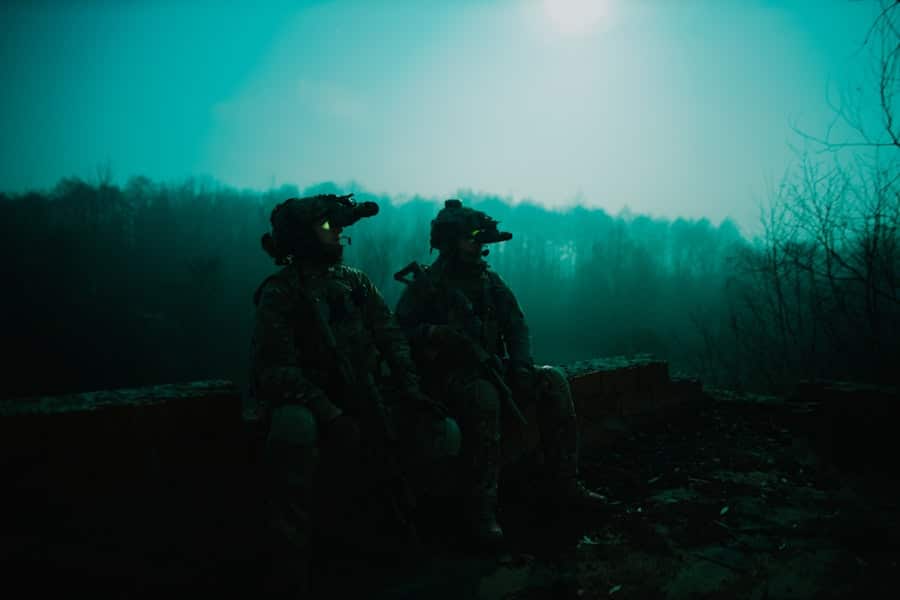
For instance, smart helmets equipped with augmented reality capabilities can overlay critical information directly onto a user’s field of vision. This allows soldiers or first responders to access maps, building schematics, or even live video feeds from drones without diverting their attention from the task at hand. Moreover, wearables can facilitate communication among team members, ensuring that everyone is on the same page during dynamic operations.
Devices that monitor vital signs can alert commanders to a team member’s physical condition, allowing for timely interventions if someone is in distress. This interconnectedness fosters a more cohesive operational environment where information flows seamlessly between personnel, enhancing collective situational awareness. The ability to share data instantaneously can lead to quicker responses to emerging threats or changes in the operational landscape, ultimately improving mission outcomes.
Advantages and Limitations of Wearables in Tactical Environments
The advantages of wearables in tactical environments are manifold. One of the most significant benefits is the enhancement of operational efficiency. Wearable devices can automate routine tasks such as data collection and reporting, allowing personnel to focus on more critical aspects of their missions.
For example, body-worn cameras can automatically record interactions during law enforcement operations, providing valuable evidence while freeing officers from the need to manually document events. Additionally, health monitoring wearables can track physiological metrics such as heart rate and body temperature, enabling commanders to make informed decisions about personnel deployment based on real-time health data. However, despite these advantages, there are limitations that must be considered when integrating wearables into tactical environments.
One major concern is the potential for technology failure or malfunction during critical operations. A device that fails to function properly can compromise situational awareness or lead to miscommunication among team members.
Additionally, the physical burden of wearing multiple devices can lead to discomfort or distraction for personnel, potentially hindering performance rather than enhancing it.
Case Studies of Successful Implementation of Wearables in Military and First Responder Operations
Several case studies illustrate the successful implementation of wearable technology in military and first responder contexts. One notable example is the U.S. Army’s Integrated Visual Augmentation System (IVAS), which combines augmented reality with advanced sensors to provide soldiers with enhanced situational awareness on the battlefield.
The IVAS allows soldiers to visualize critical information such as enemy positions and terrain features directly within their line of sight. This capability has been shown to improve decision-making speed and accuracy during combat scenarios, ultimately leading to more effective mission execution. In the realm of first responders, the use of body-worn cameras has gained traction among law enforcement agencies across the United States.
A study conducted by the University of Cambridge found that departments implementing body-worn cameras experienced a significant reduction in use-of-force incidents and complaints against officers. The cameras not only serve as a tool for accountability but also enhance situational awareness by providing officers with an objective record of events as they unfold. This dual benefit underscores the potential for wearables to improve both operational effectiveness and community relations.
Challenges and Considerations for Integrating Wearables into Operational Practices
| Metric | Description | Value / Data | Source / Notes |
|---|---|---|---|
| Wearable Device Adoption Rate | Percentage of military and first responders using wearable tech | 65% | 2023 Defense Technology Report |
| Average Response Time Improvement | Reduction in emergency response time due to wearables | 20% | Field Study 2022 |
| Health Monitoring Accuracy | Accuracy of biometric sensors in wearables | 95% | Lab Testing Results 2023 |
| Battery Life | Average operational time of wearable devices on a single charge | 18 hours | Manufacturer Specifications |
| Communication Range | Maximum effective range for wearable communication devices | 5 km | Field Test Data |
| Reduction in Injury Rates | Decrease in injuries due to real-time monitoring and alerts | 15% | Military Health Services Report 2023 |
| Data Transmission Latency | Time delay in transmitting data from wearable to command center | Under 100 ms | System Performance Metrics |
| Cost per Unit | Average cost of wearable device for military/first responders | 1200 | Procurement Data 2023 |
Integrating wearables into operational practices presents several challenges that must be addressed for successful implementation. One primary concern is training; personnel must be adequately trained not only on how to use wearable devices but also on how to interpret and act upon the data they provide. Without proper training, there is a risk that users may become overwhelmed by information overload or fail to utilize the technology effectively during high-pressure situations.
Another consideration is the need for interoperability among different systems and devices. In many cases, military and first responder units utilize a variety of technologies that may not communicate seamlessly with one another. Ensuring that wearables can integrate with existing communication systems and databases is crucial for maximizing their effectiveness.
Additionally, considerations around privacy and data security must be taken into account; as wearables collect sensitive information about personnel and operations, robust measures must be implemented to protect this data from unauthorized access or misuse.
The Impact of Wearables on Mission Effectiveness and Personnel Safety
The impact of wearables on mission effectiveness and personnel safety cannot be overstated. By providing real-time data and enhancing situational awareness, these devices enable personnel to make informed decisions quickly, which is essential in high-stakes environments where every second counts. For instance, wearable health monitors can alert commanders if a soldier is experiencing fatigue or stress levels that could impair performance, allowing for timely interventions that can prevent accidents or injuries.
Moreover, wearables contribute significantly to personnel safety by facilitating better communication and coordination among team members. In chaotic situations such as natural disasters or combat zones, clear communication is vital for ensuring that all personnel are aware of potential hazards and can respond appropriately. Wearable devices equipped with GPS tracking can help locate team members in real time, ensuring that no one is left behind during critical operations.
This capability not only enhances individual safety but also fosters a culture of accountability within teams.
Future Developments and Trends in Wearables for Military and First Responder Use
As technology continues to advance at a rapid pace, the future developments in wearables for military and first responder use are poised to be transformative.
AI algorithms can analyze data collected from various sensors in real time, providing actionable insights that can enhance decision-making processes.
For example, AI could predict potential health issues based on biometric data trends or identify patterns in environmental conditions that may pose risks during operations. Another promising development is the miniaturization of wearable technology, which will allow for even more sophisticated devices that are less intrusive and easier to use. Innovations such as flexible electronics could lead to wearables that are lightweight and unobtrusive while still delivering powerful functionality.
Additionally, advancements in battery technology may enable longer-lasting devices that require less frequent charging, further enhancing their practicality in demanding operational environments.
The Potential of Wearables to Transform Operational Capabilities
The potential of wearables to transform operational capabilities within military and first responder contexts is immense. As these technologies continue to evolve and become more integrated into everyday practices, they promise to enhance situational awareness, improve mission effectiveness, and ensure personnel safety in ways previously thought unattainable. While challenges remain regarding integration, training, and security, the ongoing development of wearable technology offers exciting possibilities for the future of operational practices in these critical fields.
As we look ahead, it is clear that wearables will play an increasingly central role in shaping how military personnel and first responders operate in complex environments. The ability to harness real-time data and improve communication will not only enhance individual performance but also foster greater collaboration among teams. Ultimately, as these technologies become more sophisticated and widely adopted, they have the potential to redefine what is possible in terms of operational effectiveness and safety for those who serve on the front lines.
In exploring the advancements of wearable technology in military and first responder operations, it’s interesting to consider how these innovations are influencing various sectors. For instance, the article on unlocking the possibilities with the Samsung Galaxy S22 discusses the integration of cutting-edge technology in everyday devices, which parallels the use of wearables in enhancing operational efficiency and safety in high-stakes environments.
FAQs
What are wearables in military and first responder operations?
Wearables in military and first responder operations refer to electronic devices worn on the body that provide real-time data, communication, and monitoring to enhance situational awareness, safety, and operational efficiency.
How do wearables benefit military personnel?
Wearables help military personnel by providing vital information such as health monitoring, location tracking, communication capabilities, and environmental data, which improve decision-making, coordination, and overall mission effectiveness.
What types of wearables are commonly used by first responders?
First responders commonly use wearables like smart helmets, body cameras, biometric sensors, GPS trackers, and communication devices to monitor health, track movements, and maintain communication during emergency situations.
Are wearables in these fields designed to withstand harsh conditions?
Yes, wearables used in military and first responder operations are typically ruggedized to endure extreme weather, physical impacts, and other challenging environmental conditions encountered in the field.
How do wearables improve safety for first responders?
Wearables enhance safety by continuously monitoring vital signs, detecting hazardous environmental factors, enabling rapid communication, and providing location tracking to facilitate timely assistance and reduce risks.
Can wearables integrate with existing military and emergency response systems?
Many wearable devices are designed to integrate seamlessly with existing communication networks, command and control systems, and data platforms to provide comprehensive situational awareness and coordinated responses.
What challenges exist in implementing wearables in military and first responder operations?
Challenges include ensuring device reliability, data security, user comfort, battery life, interoperability with other systems, and managing the volume of data generated for effective use.
Are there privacy concerns related to the use of wearables in these sectors?
Yes, privacy concerns arise regarding the collection, storage, and use of personal and operational data, necessitating strict protocols and regulations to protect sensitive information.
How is data from wearables used in military and first responder contexts?
Data from wearables is used for real-time monitoring, health assessment, mission planning, threat detection, and post-operation analysis to improve performance and safety.
What future developments are expected in wearable technology for military and first responders?
Future developments may include enhanced sensor capabilities, improved AI integration, longer battery life, better connectivity, and more ergonomic designs to further support operational effectiveness and user comfort.