

The advent of wearable technology has ushered in a new era of possibilities for individuals with disabilities, transforming the landscape of accessibility and independence. Wearable devices, ranging from smartwatches to specialized sensors, have been designed to cater to the unique needs of people with various disabilities. These innovations not only enhance the quality of life for users but also promote inclusivity by enabling them to engage more fully in society.
The integration of technology into daily life has become a powerful tool for empowerment, allowing individuals to navigate their environments with greater ease and confidence. Wearable innovations are characterized by their ability to provide real-time data, facilitate communication, and enhance mobility. For instance, devices equipped with sensors can monitor vital signs, track movements, and even alert caregivers in emergencies.
This level of connectivity and responsiveness is particularly beneficial for individuals with disabilities, as it allows for personalized support tailored to their specific needs. As technology continues to evolve, the potential applications of wearables in the realm of disability support are expanding, paving the way for a future where barriers are diminished and opportunities are amplified.
Key Takeaways
- Wearable technology significantly improves mobility, communication, and independence for people with disabilities.
- Devices enhance accessibility and assist with cognitive and sensory challenges.
- Wearables help overcome barriers, promoting greater inclusion and daily living ease.
- Case studies demonstrate real-world impacts and ongoing innovation in assistive wearables.
- The future of wearable tech holds promising potential to further empower individuals with disabilities.
Case Study: The Impact of Wearable Technology on Mobility
One of the most significant advancements in wearable technology is its impact on mobility for individuals with physical disabilities. A prime example is the development of exoskeletons—wearable robotic suits that assist users in walking. Companies like Ekso Bionics have created devices that enable individuals with spinal cord injuries or other mobility impairments to stand and walk again.
These exoskeletons use a combination of sensors and motors to detect the user’s movements and provide the necessary support to facilitate walking. Users report not only improved physical mobility but also enhanced psychological well-being, as regaining the ability to walk can significantly boost self-esteem and social interaction. Another notable innovation is the use of smart canes equipped with sensors and GPS technology.
For instance, the WeWALK smart cane integrates a smartphone app that provides navigation assistance and obstacle detection for visually impaired users. The cane can vibrate or provide audio feedback when it detects obstacles in the user’s path, allowing for safer navigation in unfamiliar environments. This technology not only enhances mobility but also fosters independence, as users can confidently explore their surroundings without relying solely on others for assistance.
Case Study: Enhancing Communication and Accessibility with Wearable Devices

Communication barriers present significant challenges for individuals with hearing impairments or speech disabilities. Wearable technology has emerged as a powerful ally in breaking down these barriers. For example, devices like the SignAloud gloves developed by researchers at the University of Washington translate American Sign Language (ASL) into spoken language in real-time.
The gloves are equipped with sensors that detect hand movements and gestures, converting them into audible speech through a connected device. This innovation not only facilitates communication between deaf and hearing individuals but also promotes greater inclusivity in social interactions. In addition to enhancing communication, wearable devices can improve accessibility in various environments.
Smart glasses, such as those developed by Aira, provide real-time visual assistance to individuals with visual impairments. Users can wear these glasses while connected to a remote agent who can see what the user sees through the camera and provide guidance or information about their surroundings. This technology empowers users to navigate public spaces, read signs, and engage in activities that may have previously been challenging due to visual limitations.
Case Study: Improving Independence and Daily Living with Wearable Innovations
Wearable technology has also made significant strides in enhancing independence for individuals with disabilities in their daily lives. One notable example is the development of smart clothing embedded with sensors that monitor health metrics and provide alerts for various conditions. For instance, the company Myant has created a line of smart textiles that can track heart rate, respiration, and even stress levels.
This data can be invaluable for individuals with chronic health conditions, allowing them to manage their health proactively and alert caregivers if necessary. Moreover, wearable devices like smartwatches have integrated features that assist users in managing daily tasks. For example, the Apple Watch includes accessibility features such as voice control, haptic feedback, and customizable notifications that cater to users with different disabilities.
These functionalities enable individuals to set reminders, receive alerts for important events, and even control smart home devices—all from their wrist. By streamlining daily activities and providing essential support, wearable innovations empower users to lead more independent lives.
Case Study: Wearable Innovations for Assisting with Cognitive and Sensory Disabilities
| Metric | Description | Value | Unit |
|---|---|---|---|
| User Adoption Rate | Percentage of target users adopting wearable devices | 68 | % |
| Improvement in Mobility | Average increase in mobility score after using wearable tech | 35 | % |
| Battery Life | Average operational time of wearable devices on a single charge | 18 | hours |
| Device Weight | Average weight of wearable devices designed for comfort | 120 | grams |
| Cost Reduction | Decrease in healthcare costs due to wearable usage | 22 | % |
| User Satisfaction | Percentage of users reporting satisfaction with device functionality | 89 | % |
| Response Time Improvement | Reduction in emergency response time enabled by wearables | 40 | % |
Cognitive disabilities present unique challenges that wearable technology is beginning to address effectively. Devices designed for individuals with conditions such as autism spectrum disorder (ASD) or dementia can provide critical support in managing daily routines and enhancing social interactions. For instance, wearable devices like the Embrace2 smartwatch are equipped with features that monitor physiological signals associated with stress or anxiety.
When these signals are detected, the device can prompt users with calming techniques or alert caregivers if necessary. In addition to cognitive support, wearable technology is also making strides in assisting individuals with sensory disabilities. For example, devices like the Sunu Band utilize echolocation technology to help visually impaired users navigate their environment.
The band emits ultrasonic waves that bounce off nearby objects, providing haptic feedback to the user about their surroundings. This innovative approach allows users to detect obstacles and navigate spaces more confidently, significantly improving their overall quality of life.
Case Study: Overcoming Barriers and Challenges with Wearable Technology
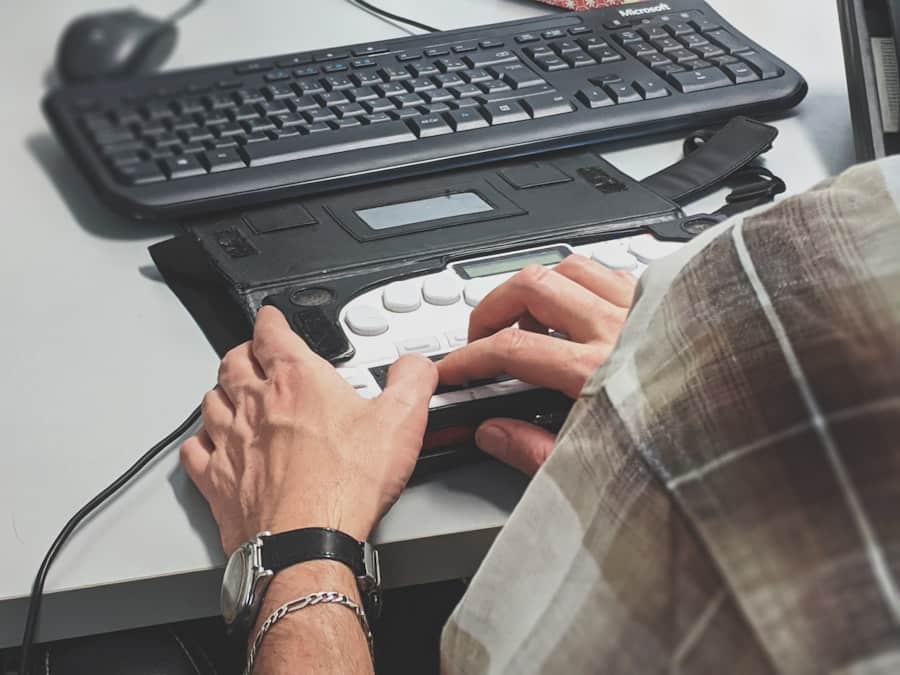
Despite the promising advancements in wearable technology for individuals with disabilities, several barriers still exist that hinder widespread adoption and effectiveness. One significant challenge is the cost associated with many wearable devices, which can be prohibitively expensive for some users or their families. For instance, advanced exoskeletons or specialized communication devices may not be covered by insurance plans, leaving individuals without access to these life-changing technologies.
Additionally, there are concerns regarding usability and accessibility of wearable devices themselves. Many products are designed without considering the diverse needs of users with disabilities, leading to complications in operation or integration into daily life. For example, a smartwatch may have features that are beneficial but may not be easily navigable for someone with limited dexterity or cognitive impairments.
Addressing these challenges requires collaboration between technologists, healthcare professionals, and individuals with disabilities to ensure that products are designed inclusively from the outset.
Case Study: The Future of Wearable Innovations for People with Disabilities
Looking ahead, the future of wearable innovations for people with disabilities appears promising as technology continues to advance at an unprecedented pace.
For instance, AI algorithms could analyze data collected from wearables to provide personalized recommendations for health management or daily activities based on individual patterns and preferences.
Researchers are exploring flexible electronics that can be woven into fabrics or embedded into everyday items without compromising functionality or aesthetics. This could result in a new generation of wearables that are not only effective but also stylish and unobtrusive.
The Potential of Wearable Technology to Empower Individuals with Disabilities
The potential of wearable technology to empower individuals with disabilities is vast and multifaceted. As innovations continue to emerge across various domains—mobility, communication, daily living, cognitive support—the impact on users’ lives is profound. By enhancing independence, improving accessibility, and fostering social inclusion, wearable devices are reshaping how individuals with disabilities interact with the world around them.
As we move forward into an era where technology becomes increasingly integrated into our daily lives, it is crucial to prioritize inclusivity in design and implementation. By addressing existing barriers and focusing on user-centered approaches, we can ensure that wearable innovations continue to serve as powerful tools for empowerment and transformation for people with disabilities. The journey toward a more inclusive society is ongoing, but wearable technology stands at the forefront of this movement, offering hope and opportunity for countless individuals seeking greater autonomy and connection in their lives.
In exploring the advancements in wearable technology for individuals with disabilities, it’s interesting to consider how smartwatches are evolving to meet diverse needs. A related article that delves into the features and innovations of smartwatches is available at Smartwatches: Fossil Review 2023. This piece highlights the latest developments in smartwatch technology, which can play a significant role in enhancing accessibility and improving the quality of life for users with disabilities.
FAQs
What are wearable innovations for people with disabilities?
Wearable innovations for people with disabilities refer to advanced devices and technologies designed to be worn on the body. These devices assist individuals with various disabilities by enhancing mobility, communication, sensory perception, and daily living activities.
How do wearable devices help people with disabilities?
Wearable devices help by providing support such as improved mobility through smart prosthetics, enhanced communication via speech-generating devices, sensory aids like hearing or vision enhancement, and health monitoring to manage medical conditions effectively.
What types of disabilities can wearable innovations assist?
Wearable innovations can assist a wide range of disabilities including physical disabilities (e.g., mobility impairments), sensory disabilities (e.g., hearing or vision loss), cognitive disabilities, and chronic health conditions that require continuous monitoring or assistance.
Are wearable devices for people with disabilities customizable?
Yes, many wearable devices are customizable to meet the specific needs of the user. Customization can include adjustments in size, functionality, software settings, and integration with other assistive technologies to provide personalized support.
What are some examples of wearable technologies for people with disabilities?
Examples include smart prosthetic limbs, wearable exoskeletons, hearing aids with Bluetooth connectivity, smart glasses for vision enhancement, communication devices for speech impairments, and health trackers that monitor vital signs.
How do wearable innovations improve independence for people with disabilities?
By providing real-time assistance, enhancing physical capabilities, and facilitating communication, wearable devices enable users to perform daily tasks more independently, reduce reliance on caregivers, and improve overall quality of life.
Are wearable devices for people with disabilities covered by insurance?
Coverage varies depending on the device, insurance provider, and country. Some wearable assistive devices may be covered under health insurance or government programs, while others might require out-of-pocket payment or special funding.
What challenges exist in developing wearable innovations for people with disabilities?
Challenges include ensuring device affordability, comfort, ease of use, battery life, durability, and compatibility with other assistive technologies. Additionally, addressing diverse user needs and obtaining regulatory approvals can be complex.
How is technology advancing wearable devices for people with disabilities?
Advancements in sensors, artificial intelligence, materials science, and wireless connectivity are enabling more sophisticated, responsive, and user-friendly wearable devices that better meet the needs of people with disabilities.
Where can people learn more about wearable innovations for disabilities?
Information can be found through healthcare providers, disability advocacy organizations, technology expos, academic research publications, and companies specializing in assistive technology products.