


Quantum computing represents a paradigm shift in the realm of computation, leveraging the principles of quantum mechanics to process information in fundamentally different ways than classical computers. At the heart of quantum computing are quantum bits, or qubits, which can exist in multiple states simultaneously due to the phenomenon known as superposition. This allows quantum computers to perform complex calculations at speeds unattainable by traditional binary systems.
Furthermore, entanglement—a unique property of quantum particles—enables qubits that are entangled to be correlated with one another, allowing for the simultaneous processing of vast amounts of data. The implications of quantum computing extend far beyond mere speed; they encompass the potential to solve problems that are currently intractable for classical computers. Industries ranging from pharmaceuticals to finance are exploring how quantum algorithms can optimize processes, enhance security, and drive innovation.
As researchers continue to develop more robust quantum systems, the logistics sector stands to benefit significantly from these advancements. The ability to analyze and optimize supply chains, route planning, and inventory management through quantum computing could revolutionize how goods are transported and managed globally.
Key Takeaways
- Quantum computing offers revolutionary potential for solving complex logistics optimization problems more efficiently than classical computers.
- Real-world case studies demonstrate significant improvements in route planning and supply chain management using quantum algorithms.
- Key challenges include hardware limitations, high costs, and the need for specialized expertise in quantum technologies.
- Benefits of quantum computing in logistics include faster decision-making, reduced operational costs, and enhanced resource allocation.
- Future advancements in quantum computing are expected to further transform logistics, making it essential for companies to prepare and invest strategically.
Quantum Computing in Logistics
The logistics industry is characterized by its complexity, involving numerous variables such as transportation routes, inventory levels, demand forecasting, and supplier relationships. Traditional optimization methods often struggle to find the most efficient solutions due to the sheer volume of data and the interdependencies between various factors. Quantum computing offers a new approach to tackle these challenges by enabling more sophisticated modeling and simulation capabilities.
For instance, quantum algorithms can analyze multiple scenarios simultaneously, providing logistics managers with insights that were previously unattainable. One of the most promising applications of quantum computing in logistics is in route optimization. Classical algorithms may take an impractical amount of time to compute the most efficient delivery routes when considering numerous constraints such as traffic patterns, delivery windows, and vehicle capacities.
Quantum algorithms, on the other hand, can evaluate these variables concurrently, leading to faster and more accurate route planning. This capability not only reduces transportation costs but also minimizes carbon emissions by optimizing fuel usage and improving delivery times.
Case Study: Implementing Quantum Computing in Logistics Optimization

A notable example of quantum computing’s application in logistics optimization can be seen in the collaboration between D-Wave Systems and Volkswagen. In this partnership, Volkswagen sought to enhance its vehicle routing processes using D-Wave’s quantum annealing technology. The goal was to optimize the delivery of vehicles from production plants to dealerships while minimizing costs and maximizing efficiency.
The project involved modeling the complex logistics network that spans across multiple locations and incorporates various constraints such as delivery schedules and vehicle capacities.
The results demonstrated a significant reduction in delivery times and costs, showcasing how quantum computing can transform logistics operations.
This case study not only highlights the practical applications of quantum technology but also serves as a blueprint for other companies looking to leverage quantum computing for logistics optimization.
Challenges and Opportunities in Quantum Computing for Logistics
Despite its potential, the integration of quantum computing into logistics is not without challenges. One significant hurdle is the current state of quantum hardware, which is still in its infancy. Many quantum computers are limited by factors such as qubit coherence times and error rates, which can affect the reliability of computations.
As a result, organizations must carefully consider whether their specific logistics challenges can be effectively addressed with existing quantum technologies or if they need to wait for further advancements. Moreover, there is a steep learning curve associated with quantum programming and algorithm development. Logistics professionals may require specialized training to understand how to formulate problems in a way that is compatible with quantum computing paradigms.
However, these challenges also present opportunities for innovation. As more companies invest in quantum research and development, there is potential for breakthroughs that could lead to more robust and accessible quantum systems tailored for logistics applications.
Benefits of Quantum Computing in Logistics Optimization
| Metric | Traditional Computing | Quantum Computing | Improvement | Notes |
|---|---|---|---|---|
| Optimization Time | 12 hours | 30 minutes | 96% faster | Significant reduction in route calculation time |
| Cost Efficiency | Baseline | 15% reduction | 15% improvement | Lower fuel and labor costs due to optimized routes |
| Delivery Accuracy | 85% | 95% | 10% increase | More precise scheduling and routing |
| Energy Consumption | 100 units | 80 units | 20% reduction | Less computational power required for optimization |
| Scalability | Limited to 500 routes | 10,000+ routes | 20x increase | Handles larger datasets efficiently |
The benefits of implementing quantum computing in logistics optimization are manifold. One of the most significant advantages is the ability to process vast datasets quickly and efficiently. Traditional optimization techniques often rely on heuristics or approximations due to computational limitations; however, quantum algorithms can explore a broader solution space more thoroughly.
This leads to more accurate predictions and better decision-making capabilities for logistics managers. Additionally, quantum computing can enhance supply chain resilience by enabling real-time data analysis and scenario modeling. In an increasingly volatile global market, logistics companies must be agile enough to respond to disruptions such as natural disasters or geopolitical events.
Quantum systems can simulate various scenarios rapidly, allowing organizations to devise contingency plans and adapt their operations accordingly. This level of responsiveness not only improves operational efficiency but also enhances customer satisfaction by ensuring timely deliveries even in challenging circumstances.
Future Implications of Quantum Computing in Logistics
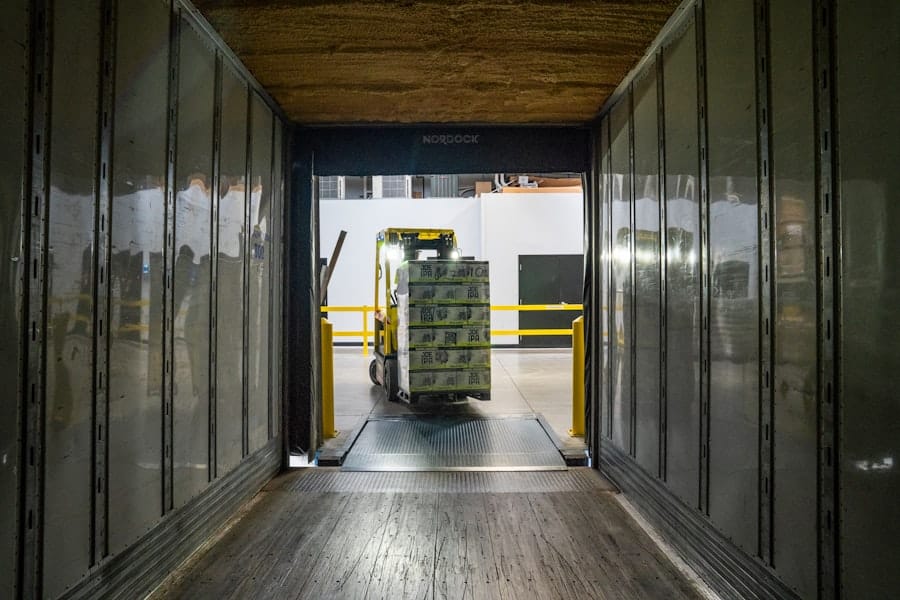
As quantum computing technology continues to evolve, its implications for the logistics industry will likely expand significantly. Future advancements may lead to the development of hybrid systems that combine classical and quantum computing capabilities, allowing organizations to leverage the strengths of both approaches. Such systems could facilitate more seamless integration into existing logistics frameworks while maximizing computational power.
Moreover, as quantum algorithms become more sophisticated, they may enable entirely new business models within logistics. For instance, companies could utilize real-time data from IoT devices combined with quantum analytics to create dynamic pricing models based on demand fluctuations or optimize inventory levels based on predictive analytics. The potential for innovation is vast; businesses that embrace these changes early may gain a competitive edge in an increasingly data-driven marketplace.
Quantum Computing’s Impact on Logistics Optimization
The impact of quantum computing on logistics optimization is poised to be transformative. By harnessing the power of quantum mechanics, logistics companies can unlock new levels of efficiency and effectiveness in their operations. The ability to analyze complex datasets rapidly and accurately will enable organizations to make informed decisions that drive cost savings and improve service levels.
As demonstrated through case studies like Volkswagen’s vehicle routing project, practical applications are already emerging that showcase the tangible benefits of this technology. As we look ahead, it is clear that the journey toward widespread adoption of quantum computing in logistics will require collaboration between technology providers, logistics companies, and academic institutions. By working together to overcome challenges and explore innovative solutions, stakeholders can pave the way for a future where logistics operations are optimized through the power of quantum computing.
Recommendations for Implementing Quantum Computing in Logistics
For organizations looking to implement quantum computing solutions in their logistics operations, several recommendations can facilitate a successful transition. First and foremost, it is essential to conduct a thorough assessment of existing processes and identify specific areas where quantum computing could provide significant value. This targeted approach ensures that resources are allocated effectively and that efforts are focused on high-impact projects.
Investing in training and education for staff is also crucial. As mentioned earlier, understanding how to formulate problems for quantum algorithms requires specialized knowledge. Organizations should consider partnering with academic institutions or technology providers that offer training programs tailored to their needs.
Furthermore, fostering a culture of innovation within the organization can encourage experimentation with emerging technologies like quantum computing. Establishing cross-functional teams that include data scientists, logistics experts, and IT professionals can facilitate collaboration and drive creative solutions. Finally, staying informed about advancements in quantum technology is vital for organizations aiming to remain competitive in the logistics sector.
Engaging with industry forums, attending conferences, and participating in research initiatives can provide valuable insights into best practices and emerging trends in quantum computing applications for logistics optimization.
In exploring the transformative potential of quantum computing in logistics optimization, it is interesting to consider how advancements in technology are reshaping various sectors. A related article that delves into the impact of innovative technology on everyday devices is available at New World of Possibilities with the Samsung Galaxy Chromebook 2 360. This piece highlights how cutting-edge technology can enhance productivity and efficiency, paralleling the benefits that quantum computing promises to bring to logistics and supply chain management.
FAQs
What is quantum computing?
Quantum computing is a type of computing that uses quantum bits, or qubits, which can represent and process information in ways that classical bits cannot. This allows quantum computers to solve certain complex problems more efficiently than traditional computers.
How is quantum computing applied in logistics optimization?
Quantum computing can be used to optimize logistics by solving complex problems such as route planning, supply chain management, and resource allocation more efficiently. It can handle large datasets and complex variables to find optimal or near-optimal solutions faster than classical methods.
What are the benefits of using quantum computing in logistics?
The benefits include faster problem-solving times, improved accuracy in optimization, the ability to handle complex and large-scale logistics problems, and potential cost savings through more efficient resource use and reduced delivery times.
Are quantum computers widely available for logistics companies?
Currently, quantum computers are mostly in the research and development phase and are not widely available for commercial use. However, many companies and research institutions offer access to quantum computing resources through cloud platforms for experimentation and development.
What challenges exist in implementing quantum computing for logistics?
Challenges include the current limitations of quantum hardware, the need for specialized knowledge to develop quantum algorithms, integration with existing systems, and the high cost of quantum computing resources.
Can quantum computing replace classical computing in logistics?
Quantum computing is not expected to replace classical computing entirely but rather to complement it. Quantum computers are particularly suited for specific optimization problems, while classical computers will continue to handle general computing tasks.
What industries in logistics can benefit most from quantum computing?
Industries such as transportation, supply chain management, warehousing, and delivery services can benefit significantly from quantum computing by improving route optimization, inventory management, and demand forecasting.
Is quantum computing secure for logistics data?
Quantum computing introduces new considerations for data security. While it has the potential to break some classical encryption methods, it also enables the development of quantum-resistant cryptography to protect sensitive logistics data.
How soon will quantum computing impact logistics optimization?
While research is progressing rapidly, widespread practical impact is expected in the next 5 to 10 years as quantum hardware and algorithms mature and become more accessible to industry users.