

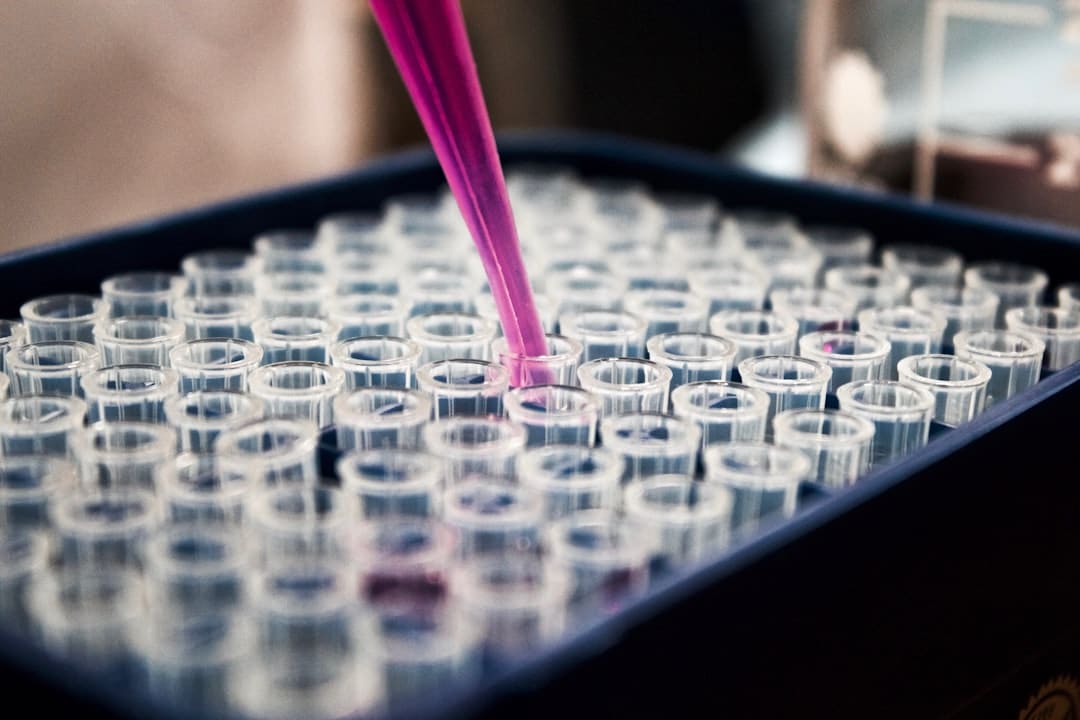
Drug discovery is experiencing significant changes through the implementation of artificial intelligence technologies. Traditional drug development processes typically require 10-15 years and cost between $1-3 billion per approved drug, with success rates below 12% for compounds entering clinical trials. AI integration addresses these challenges by introducing computational methods that improve efficiency and reduce development timelines.
AI applications in drug discovery utilize machine learning algorithms, natural language processing, and deep learning neural networks to process large-scale biological and chemical datasets. These systems analyze molecular structures, protein interactions, and genomic data to identify promising drug candidates and predict their therapeutic potential. Machine learning models can screen millions of compounds in silico, reducing the need for extensive laboratory testing in early discovery phases.
Pharmaceutical companies have begun incorporating AI platforms into their research pipelines to accelerate target identification, lead optimization, and clinical trial design. These technologies enable researchers to predict drug-target interactions, assess toxicity profiles, and optimize molecular properties before synthesis. Current AI-driven drug discovery platforms can reduce initial screening time from months to weeks and improve the probability of identifying viable therapeutic compounds.
Key Takeaways
- AI and quantum algorithms are transforming drug discovery by enhancing speed and accuracy.
- Quantum algorithms offer novel approaches to complex molecular simulations in drug design.
- Case studies demonstrate successful integration of AI and quantum computing in identifying potential drug candidates.
- Despite promising potential, challenges include computational limitations, data quality, and ethical concerns.
- Future advancements and regulatory frameworks are crucial for the responsible development of AI-powered drug discovery.
Understanding Quantum Algorithms in Drug Discovery
Quantum algorithms offer a revolutionary approach to solving complex problems that are intractable for classical computers. In the context of drug discovery, these algorithms can significantly enhance the simulation of molecular interactions and the optimization of chemical compounds. Quantum computing leverages the principles of quantum mechanics, utilizing qubits that can exist in multiple states simultaneously, allowing for parallel processing of information.
This capability is particularly advantageous in drug discovery, where the interactions between molecules can be extraordinarily complex. One of the most promising quantum algorithms for drug discovery is the Variational Quantum Eigensolver (VQE), which is designed to find the ground state energy of quantum systems. By accurately calculating molecular energies, VQE can help researchers identify stable configurations of drug candidates and predict their reactivity.
Additionally, quantum algorithms can facilitate the exploration of chemical space—an expansive domain that includes all possible molecular structures—more efficiently than classical methods. This efficiency is crucial in identifying novel compounds that may have therapeutic potential.
Case Study: Applying AI and Quantum Algorithms in Drug Discovery

A notable case study illustrating the application of AI and quantum algorithms in drug discovery is the collaboration between pharmaceutical giant Roche and IBM’s Quantum team. This partnership aims to leverage quantum computing to accelerate the discovery of new treatments for diseases such as cancer. By employing quantum algorithms alongside AI-driven data analysis, Roche seeks to enhance its ability to model complex biological systems and predict how new compounds will behave in clinical settings.
In this collaboration, researchers utilized quantum simulations to explore the interactions between potential drug candidates and their biological targets at an unprecedented level of detail. The integration of AI allowed for the rapid analysis of vast datasets generated from these simulations, enabling scientists to prioritize which compounds to synthesize and test in the lab. Early results from this initiative have shown promise in identifying novel compounds that traditional methods may have overlooked, demonstrating the potential for quantum-enhanced AI to revolutionize drug discovery processes.
Impact and Potential of AI-Powered Drug Discovery
The impact of AI-powered drug discovery extends beyond mere efficiency gains; it has the potential to fundamentally alter the trajectory of medical research and patient care. By significantly reducing the time required to identify viable drug candidates, AI can expedite the development of treatments for diseases that currently lack effective therapies. For instance, during the COVID-19 pandemic, AI-driven platforms were instrumental in rapidly identifying existing drugs that could be repurposed for treating the virus, showcasing how these technologies can respond to urgent public health needs.
Moreover, AI’s ability to analyze large datasets allows for more personalized medicine approaches. By integrating patient data with drug discovery efforts, researchers can develop therapies tailored to specific genetic profiles or disease subtypes. This precision medicine approach not only enhances treatment efficacy but also minimizes adverse effects by ensuring that patients receive therapies most likely to benefit them based on their unique biological characteristics.
The potential for AI to facilitate such advancements underscores its transformative role in modern healthcare.
Challenges and Limitations of AI-Powered Drug Discovery with Quantum Algorithms
| Metric | Value | Description |
|---|---|---|
| Drug Candidates Screened | 10,000+ | Number of molecular compounds analyzed using AI and quantum algorithms |
| Reduction in Screening Time | 70% | Decrease in time required to identify promising drug candidates compared to classical methods |
| Accuracy Improvement | 15% | Increase in prediction accuracy of molecular interactions using quantum-enhanced AI models |
| Computational Resources Used | Quantum Processor (64 qubits) | Type of quantum hardware employed for simulations |
| AI Model Type | Hybrid Quantum-Classical Neural Network | Architecture combining classical deep learning with quantum computing |
| Lead Compounds Identified | 5 | Number of promising drug candidates selected for further testing |
| Simulation Speedup | 3x | Factor by which quantum algorithms accelerated molecular simulations |
Despite the promising advancements in AI-powered drug discovery, several challenges and limitations persist that must be addressed for these technologies to reach their full potential. One significant hurdle is the quality and availability of data. AI algorithms rely heavily on large datasets for training; however, in many cases, high-quality data may be scarce or difficult to obtain.
Incomplete or biased datasets can lead to inaccurate predictions and hinder the development of effective therapies. Additionally, while quantum computing holds great promise, it is still in its infancy. Current quantum computers are limited by issues such as qubit coherence times and error rates, which can affect the reliability of quantum simulations used in drug discovery.
As researchers work to overcome these technical challenges, there remains a need for robust hybrid models that combine classical computing with quantum algorithms to maximize their effectiveness in real-world applications.
Future Outlook for AI-Powered Drug Discovery

The future outlook for AI-powered drug discovery is marked by optimism and potential breakthroughs that could reshape the pharmaceutical landscape. As advancements in both AI and quantum computing continue to progress, we can expect more sophisticated models capable of simulating complex biological systems with greater accuracy. The integration of these technologies will likely lead to faster identification of drug candidates and more efficient clinical trial designs.
Moreover, as regulatory bodies begin to adapt to these technological advancements, we may see an increase in collaborative efforts between academia, industry, and government agencies aimed at fostering innovation in drug discovery. Initiatives that promote data sharing and standardization will be crucial in overcoming current limitations and ensuring that AI-driven approaches are both effective and safe for patients. The convergence of AI and quantum computing could herald a new era in which previously untreatable diseases become manageable through targeted therapies developed at unprecedented speeds.
Ethical and Regulatory Considerations in AI-Powered Drug Discovery
As with any transformative technology, ethical and regulatory considerations play a critical role in shaping the future of AI-powered drug discovery. The use of AI raises questions about data privacy, informed consent, and algorithmic bias. Ensuring that patient data is handled responsibly and ethically is paramount; researchers must navigate complex legal frameworks while maintaining transparency in their methodologies.
Regulatory bodies are also faced with the challenge of keeping pace with rapid technological advancements.
This includes developing standards for validating AI algorithms and ensuring that they are rigorously tested before being applied in clinical settings.
As stakeholders work together to address these ethical concerns, it will be crucial to strike a balance between encouraging innovation and protecting public health.
The Role of AI and Quantum Algorithms in Revolutionizing Drug Discovery
The integration of AI and quantum algorithms into drug discovery represents a significant leap forward in our ability to develop new therapies efficiently and effectively. By harnessing the power of these technologies, researchers can navigate the complexities of biological systems with unprecedented precision, ultimately leading to better patient outcomes. While challenges remain, ongoing advancements in both fields promise a future where drug discovery is not only faster but also more personalized and accessible.
As we continue to explore the potential of AI-powered drug discovery, it is essential to remain vigilant about ethical considerations and regulatory frameworks that will guide this evolution. The collaboration between technology developers, pharmaceutical companies, regulatory agencies, and healthcare providers will be vital in ensuring that these innovations translate into tangible benefits for patients worldwide. The journey toward revolutionizing drug discovery through AI and quantum algorithms is just beginning, but its implications for healthcare are profound and far-reaching.
In the realm of innovative technologies, the intersection of artificial intelligence and quantum computing is paving the way for groundbreaking advancements in drug discovery.

<ul class=)