

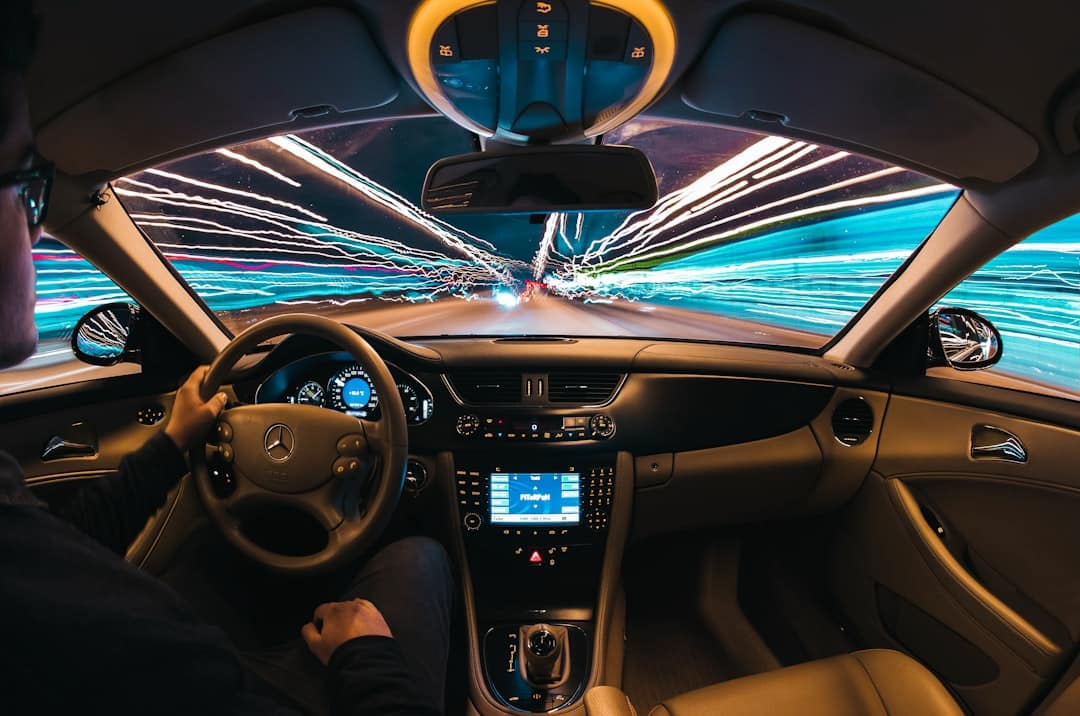
Autonomous driving systems represent a transformative leap in the evolution of transportation technology. These systems, often referred to as self-driving cars, utilize a combination of sensors, cameras, and advanced algorithms to navigate and operate vehicles without human intervention. The development of autonomous vehicles (AVs) has been propelled by significant advancements in artificial intelligence (AI), machine learning, and sensor technology.
As urbanization continues to rise and the demand for efficient transportation solutions grows, the integration of autonomous driving systems into everyday life is becoming increasingly plausible. The journey toward fully autonomous vehicles has been marked by various levels of automation, classified by the Society of Automotive Engineers (SAE) into six distinct levels, ranging from Level 0 (no automation) to Level 5 (full automation). Each level signifies a different degree of human involvement in the driving process.
Currently, many vehicles on the market feature Level 2 automation, which includes advanced driver-assistance systems (ADAS) such as adaptive cruise control and lane-keeping assistance. However, the ultimate goal is to achieve Level 5 autonomy, where vehicles can operate independently in any environment without human oversight.
Key Takeaways
- AI is central to the development and operation of autonomous driving systems.
- Implementing AI enhances vehicle safety and operational efficiency.
- Challenges include technical limitations, ethical dilemmas, and legal regulations.
- Future trends point to more advanced AI capabilities and integration in autonomous vehicles.
- Ethical and legal considerations are critical for responsible AI deployment in autonomous driving.
Overview of AI in Autonomous Driving
Artificial intelligence plays a pivotal role in the functioning of autonomous driving systems. At its core, AI enables vehicles to perceive their surroundings, make decisions based on real-time data, and learn from experiences. The integration of machine learning algorithms allows these systems to improve their performance over time by analyzing vast amounts of data collected from various sensors and cameras.
This data-driven approach is essential for tasks such as object detection, path planning, and decision-making in complex driving scenarios. One of the most critical components of AI in autonomous driving is computer vision. This technology allows vehicles to interpret visual information from their environment, identifying objects such as pedestrians, cyclists, traffic signs, and other vehicles.
By employing deep learning techniques, autonomous systems can achieve high levels of accuracy in object recognition, which is crucial for safe navigation.
Case Study: Implementation of AI in Autonomous Driving Systems

A notable example of AI implementation in autonomous driving is Waymo, a subsidiary of Alphabet Inc. Waymo has been at the forefront of developing self-driving technology since its inception as the Google Self-Driving Car Project in 2009. The company has conducted extensive testing of its autonomous vehicles in various urban environments, accumulating millions of miles of real-world driving data.
This data serves as a foundation for training its AI algorithms, enabling the vehicles to navigate complex traffic situations with remarkable precision. Waymo’s approach involves a combination of high-definition mapping and real-time sensor data processing. The vehicles are equipped with an array of sensors, including LiDAR, cameras, and radar, which work together to create a detailed 360-degree view of the environment.
The AI system processes this information to identify obstacles, predict the behavior of other road users, and make informed decisions about speed and direction. In 2020, Waymo launched its fully autonomous ride-hailing service in Phoenix, Arizona, marking a significant milestone in the commercialization of self-driving technology. This service operates without a safety driver present in the vehicle, showcasing the potential for AI-driven systems to reshape urban mobility.
Benefits and Challenges of Using AI in Autonomous Driving
The adoption of AI in autonomous driving systems offers numerous benefits that extend beyond mere convenience. One of the most significant advantages is the potential for enhanced safety on the roads. Human error is a leading cause of traffic accidents, accounting for approximately 94% of all crashes according to the National Highway Traffic Safety Administration (NHTSA).
By eliminating human factors such as distraction, fatigue, and impaired judgment, autonomous vehicles have the potential to drastically reduce accident rates. Moreover, AI-driven systems can optimize traffic flow and reduce congestion. By communicating with other vehicles and infrastructure through vehicle-to-everything (V2X) technology, autonomous cars can make real-time adjustments to their routes and speeds based on current traffic conditions.
This capability not only improves efficiency but also contributes to lower emissions by minimizing stop-and-go traffic patterns. However, the integration of AI into autonomous driving systems is not without its challenges. One major concern is the reliability of AI algorithms in unpredictable environments.
While extensive testing can prepare vehicles for common scenarios, rare or unusual situations may still pose risks. For instance, how an autonomous vehicle reacts to an unexpected roadblock or an erratic pedestrian can significantly impact safety outcomes. Additionally, there are concerns regarding cybersecurity; as vehicles become more connected, they may be vulnerable to hacking or malicious attacks that could compromise their operation.
Impact of AI on Safety and Efficiency in Autonomous Driving
| Metric | Description | Value | Unit | Notes |
|---|---|---|---|---|
| Perception Accuracy | Ability of AI to correctly identify objects | 98.5 | % | Includes pedestrians, vehicles, and obstacles |
| Reaction Time | Time taken to respond to detected hazards | 120 | milliseconds | Measured from sensor input to action initiation |
| Lane Keeping Precision | Accuracy in maintaining lane position | 0.15 | meters | Average deviation from lane center |
| System Uptime | Operational availability of AI system | 99.9 | % | Measured over 12 months |
| False Positive Rate | Incorrect hazard detection rate | 0.8 | % | Lower is better for user trust |
| Training Data Size | Amount of data used to train AI models | 5 | million images | Diverse driving conditions included |
| Energy Consumption | Power usage of AI processing unit | 45 | Watts | During active driving mode |
| Number of Sensors | Count of sensors integrated for perception | 12 | units | Includes cameras, LiDAR, radar, ultrasonic |
The impact of AI on safety and efficiency in autonomous driving cannot be overstated. Advanced algorithms enable vehicles to process information at speeds far beyond human capabilities, allowing for rapid decision-making that can prevent accidents. For example, AI systems can analyze data from multiple sensors simultaneously to detect potential hazards and respond accordingly—whether that means braking suddenly or steering away from an obstacle.
Furthermore, AI enhances efficiency through predictive analytics. By analyzing historical traffic patterns and real-time data, autonomous vehicles can optimize their routes to avoid congested areas or accidents. This capability not only saves time for passengers but also reduces fuel consumption and emissions.
A study conducted by the International Transport Forum found that widespread adoption of autonomous vehicles could lead to a reduction in urban traffic congestion by up to 30%, highlighting the potential for AI-driven systems to transform urban mobility. In addition to improving individual vehicle performance, AI can facilitate better coordination among fleets of autonomous vehicles. For instance, ride-sharing services utilizing autonomous cars can dynamically adjust their operations based on demand fluctuations throughout the day.
This adaptability ensures that vehicles are deployed efficiently where they are needed most while minimizing idle time.
Future Trends and Developments in AI for Autonomous Driving

As technology continues to evolve, several trends are emerging that will shape the future of AI in autonomous driving. One significant trend is the increasing integration of artificial intelligence with edge computing. By processing data closer to where it is generated—within the vehicle itself—edge computing reduces latency and enhances real-time decision-making capabilities.
This advancement is particularly crucial for applications requiring immediate responses, such as collision avoidance. Another trend is the growing emphasis on collaborative AI systems that leverage data from multiple sources. For instance, autonomous vehicles could share information with each other and with smart city infrastructure to create a more cohesive transportation ecosystem.
This collaboration could lead to improved traffic management and enhanced safety measures across entire urban areas. Moreover, advancements in sensor technology will continue to play a vital role in enhancing the capabilities of autonomous driving systems. The development of more sophisticated LiDAR systems with higher resolution and improved range will enable vehicles to detect objects at greater distances and with greater accuracy.
Additionally, innovations in camera technology will enhance computer vision capabilities, allowing for better performance in low-light conditions or adverse weather.
Ethical and Legal Considerations in AI for Autonomous Driving
The deployment of AI in autonomous driving raises several ethical and legal considerations that must be addressed as technology advances. One pressing ethical dilemma involves decision-making algorithms during unavoidable accidents—often referred to as the “trolley problem.” In scenarios where an accident is imminent, how should an autonomous vehicle prioritize the safety of its occupants versus pedestrians or other road users? These moral questions challenge developers and policymakers to establish guidelines that reflect societal values while ensuring public safety.
Legal frameworks surrounding liability also require careful consideration. In cases where an autonomous vehicle is involved in an accident, determining responsibility can be complex.
Or does liability fall on the owner for failing to maintain the vehicle properly? As AVs become more prevalent on public roads, legal systems will need to adapt to address these new challenges effectively. Furthermore, issues related to data privacy must be taken into account as autonomous vehicles collect vast amounts of data about their surroundings and passengers.
Ensuring that this data is handled responsibly and securely will be paramount in maintaining public trust in these technologies.
The Role of AI in Shaping the Future of Autonomous Driving
The role of artificial intelligence in shaping the future of autonomous driving is profound and multifaceted. As we stand on the brink of a new era in transportation, AI technologies are not only enhancing vehicle capabilities but also redefining our relationship with mobility itself. From improving safety and efficiency on our roads to addressing complex ethical dilemmas and legal challenges, AI is at the forefront of this transformation.
As research continues and technology advances, it is clear that AI will remain integral to developing fully autonomous driving systems capable of navigating our increasingly complex urban landscapes. The journey toward widespread adoption may be fraught with challenges; however, the potential benefits—ranging from reduced traffic fatalities to enhanced environmental sustainability—underscore the importance of continued investment and innovation in this field. The future promises a new paradigm in transportation where AI-driven solutions will play a critical role in shaping how we move through our world.
In exploring the advancements in AI for autonomous driving systems, it’s interesting to consider how technology is evolving across various domains. For instance, the article on how to choose a PC for students highlights the importance of selecting the right technology to support learning and innovation, which is also crucial in the development of autonomous systems. You can read more about it in the article here.
FAQs
What is the role of AI in autonomous driving systems?
AI enables autonomous vehicles to perceive their environment, make decisions, and control the vehicle without human intervention. It processes data from sensors, recognizes objects, predicts movements, and plans safe driving paths.
What types of AI technologies are commonly used in autonomous driving?
Common AI technologies include machine learning, deep learning, computer vision, sensor fusion, and reinforcement learning. These technologies help in object detection, lane keeping, traffic sign recognition, and adaptive cruise control.
How do autonomous vehicles perceive their surroundings?
Autonomous vehicles use a combination of sensors such as cameras, LiDAR, radar, and ultrasonic sensors. AI algorithms process the sensor data to identify obstacles, road markings, traffic signals, and other vehicles.
What are the main challenges faced by AI in autonomous driving?
Challenges include handling complex and unpredictable road scenarios, ensuring safety and reliability, dealing with adverse weather conditions, and addressing ethical and legal considerations.
How is AI tested and validated in autonomous driving systems?
AI systems undergo extensive simulation testing, real-world driving tests, and scenario-based evaluations to ensure performance and safety. Validation includes checking for accuracy in perception, decision-making, and control under diverse conditions.
What benefits does AI bring to autonomous driving?
AI improves road safety by reducing human error, enhances traffic efficiency, enables mobility for people unable to drive, and can reduce emissions through optimized driving patterns.
Are there any ethical concerns related to AI in autonomous driving?
Yes, ethical concerns include decision-making in unavoidable accident scenarios, data privacy, accountability in case of failures, and ensuring equitable access to autonomous driving technology.
How does AI handle unexpected situations on the road?
AI systems use real-time data analysis and predictive modeling to respond to unexpected events. They are designed to prioritize safety by slowing down, stopping, or maneuvering to avoid hazards.
What is the future outlook for AI in autonomous driving?
The future includes advancements in AI algorithms, improved sensor technologies, greater regulatory support, and widespread adoption of fully autonomous vehicles in various transportation sectors.